Air Quality Archives | Campbell Associates

Are All MCERTS dust monitors suitable for construction projects?

Air Quality & Dust

MCERTS-certified indicative dust monitors are widely specified for construction projects across the UK. However, are all MCERTS monitors truly suitable for construction applications?

The MCERTS indicative certification is primarily achieved through comparative measurements against reference-grade instruments in background (ambient) locations. To gain certification, a sample of instruments must demonstrate good long-term correlation with the reference method.

While this approach is appropriate for ambient community air quality monitoring, it does not necessarily mean a monitor is suitable for construction environments. There are several important differences to consider:

1. Averaging Periods

MCERTS indicative assessments are based on 24-hour average measurements. This works well for community air quality monitoring, where daily mean values are the primary concern.

Construction projects, however, typically operate over a working day of around 10 hours, with dust limits often defined over hourly or 15 minute periods. Monitoring systems therefore need to:

  • Measure accurately over short averaging periods
  • Identify dust events in real time
  • Trigger immediate alerts when limits are exceeded

A monitor optimised for 24-hour averages may not provide the responsiveness required on a live construction site.

2. Concentration Ranges

MCERTS comparative testing is conducted at ambient locations where particulate concentrations are relatively low – typically around 40 µg/m³.

Construction sites, by contrast, can generate significantly higher dust levels, often 150 µg/m³ or more. Dust monitors used on construction projects must therefore maintain accuracy across a much wider and higher concentration range than is typically encountered in ambient environments.

3. Measurement of PM₁₀

Although all MCERTS indicative dust monitors report PM₁₀, not all of them directly measure it.

Some instruments measure PM₂.₅ and apply a fixed conversion factor to estimate PM₁₀. In ambient environments, this can produce good correlation because PM₂.₅ and PM₁₀ levels often track closely together.

On construction sites, however, dust sources are very different. Coarser particles are more prevalent, and PM₁₀ does not necessarily follow PM₂.₅ in the same way. For construction applications, it is important that the optical sensor directly measures PM₁₀ rather than inferring it.

4. Heated Inlets
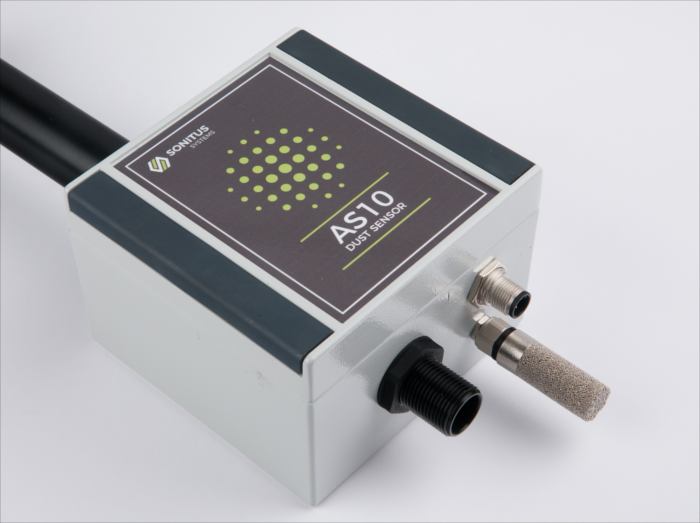
Many MCERTS indicative monitors are not fitted with heated inlets.

Heated inlets are used to dry the sample air and remove fog and mist droplets, which would otherwise be detected as particulate matter. In construction monitoring, particularly where reporting periods are short fog or mist can generate false dust events if the sample air is not properly conditioned.


Choosing the Right Monitor

MCERTS certification ensures environmental data is accurate and reliable, but certification alone does not guarantee suitability for every application.

When selecting a dust monitor for construction, it is essential to consider:

  • Short-term averaging capability
  • Performance at higher concentration ranges
  • True PM₁₀ measurement
  • Effective inlet conditioning

If you are unsure which type of dust monitor is most appropriate for your project, please contact the team at Campbell Associates for advice.
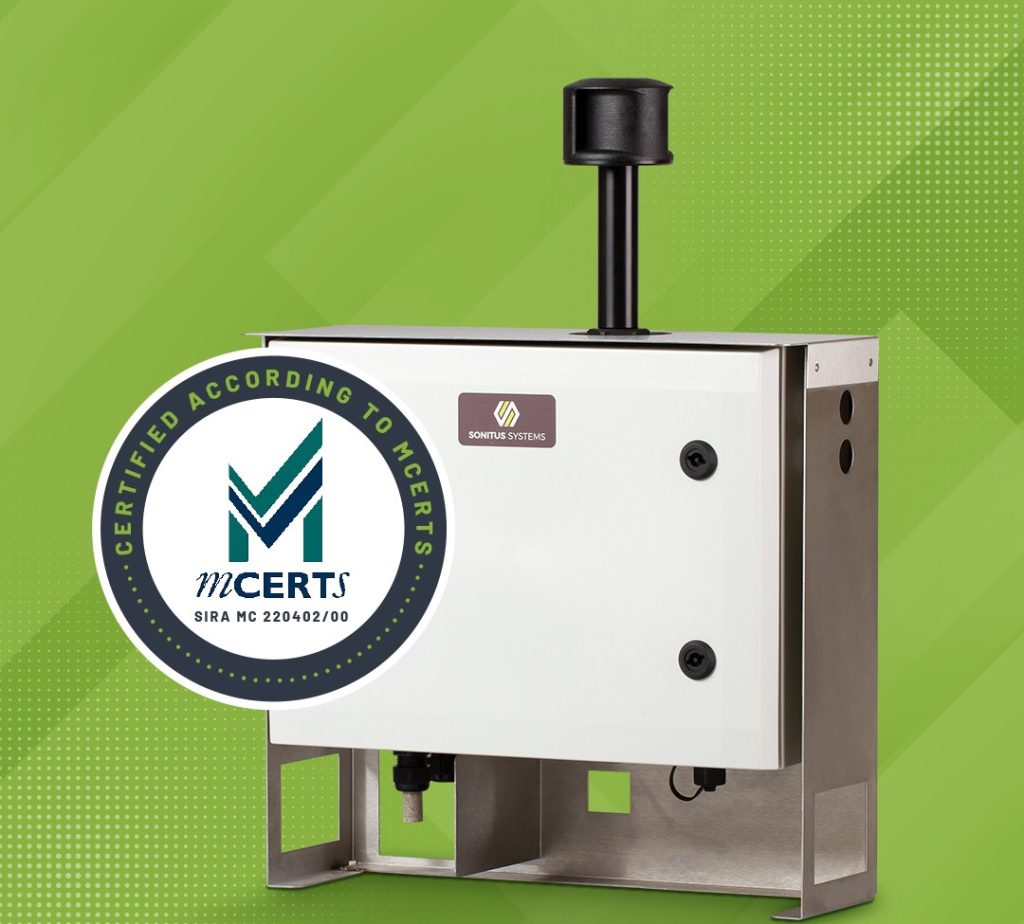

MCERTS is the Environment Agency certification scheme designed to ensure environmental monitoring equipment meets defined standards of accuracy and reliability.

Invisible threats: understanding PM2.5 and PM10 in your indoor air

Air Quality & Dust

What is an airborne partiuclate?

An airborne particulate, also known as particulate matter (PM), is a microscopic solid or liquid particle that remains suspended in the air. These particles are incredibly diverse in size, shape, and chemical composition, originating from both natural sources like dust and pollen, and human activities such as combustion and industrial processes. Categorized by their aerodynamic diameter, particularly as PM10 (coarse particles) and PM2.5 (fine particles), these tiny airborne components can persist in the atmosphere for varying durations depending on their size, and their presence is a key factor in air quality assessments due to their potential impacts on human health and the environment.

What is the legislation for England?

The HSE have set exposure standards to comply with the requirements of The Control of Substances Hazardous to Health (COSHH) Regulations. These are described in the HSE document EH40, which is updated annually. Currently, these are:

  • 10,000 ug/m3 (8 hour time weighted average) for total inhalable dust.
  • 4,000 ug/m3 (8 hour time weighted average) for respirable dust.

Total inhalable dust is defined as the fraction of airborne dust which enters the nose and mouth during breathing and is therefore available for deposition in the respiratory tract. Respirable dust approximates to the proportion which penetrates to the alveoli within the lung.

European emissions standards have highlighted a yearly average of 40 μg/m³ and 25 μg/m³ for PM10 and PM2.5 respectively. The ‘WHO’ standards outline a guideline of 20 μg/m³ and 10 μg/m³ for PM10 and PM2.5 respectively.

Can they be monitored?

Yes! Absolutely. Our monitors provide reliable, high-quality data on particulate concentrations, enabling local authorities, construction sites, and environmental consultants to effectively assess air quality, identify pollution sources, and demonstrate compliance with the stringent standards set to protect public health across the United Kingdom.

Smart cities – air quality

Air Quality & Dust

Practicalities of rolling out air quality sensor networks – Harnessing smart city infrastructure

Poor air quality is a major issue in communities across the UK and it continues to climb the agenda with public awareness growing of the real detrimental health effects. In order to identify issues, it is important to be able to make accurate measurements to quantify the problem areas. Low-cost air quality sensor-based systems are becoming more popular as they now provide scientifically credible data at reasonable cost, have lower servicing requirements and they come in a form factor that means they can be deployed in roadside locations. Previously these issues have been dealt with by diffusion tubes, which are also low cost and small enough to be located anywhere. However, the disadvantage of diffusion tubes is the manpower required to deploy and collect them and the lack of temporal data to see problem days and times of the day. This high time resolution data is important for managing air quality.

Locating Sensor Based Monitors The systems require a secure location to mount them which in a city/town centre is not always easy to find. They also need power to run effectively, as solar does not yet provide the supply in the UK to run year-round without major compromises to the data collection rates and quality. Finally, these systems will need communications such as wifi, LAN or cellular coverage. These issues multiplied many times for a high-density network can be a challenge, but it is not a challenge unique to Air Quality sensors.

Our towns and communities are filling with ‘smart city’ infrastructure such as street lighting, charging points, bus shelters, mobile phone masts and much more. All of this hardware will have similar issues when it comes to locating them. If air quality sensors are considered with other infrastructure, then costs can be reduced significantly. If we take the rollout of 5G for example, this will require a huge investment in new hardware and many more sites will be required. It is estimated 40 to 50% of operating costs for mobile phone infrastructure is for rent paid to property owners for mast locations.  Adding air quality sensors to the mast could provide additional revenue and value for communities. 

With joined-up thinking air quality monitoring networks can be rolled out sooner and more efficiently. This will enable decision-makers to tackle the issue more effectively to protect us all from the serious adverse health effects of poor air quality.