

Noise Monitoring
Continuous Class 1 environmental noise monitoring with configurable alerts, audio features and cloud reporting.
Monitor noise, dust, vibration, weather and structural movement with one integrated cloud solution, supported by installation, reporting and technical expertise.
Construction monitoring becomes unnecessarily complicated when noise, dust, vibration, weather and movement are managed through separate instruments, platforms and suppliers. Our solution brings the monitoring system together.
Continuous Class 1 environmental noise monitoring with configurable alerts, audio features and cloud reporting.
Continuous PM10 and PM2.5 monitoring with MCERTS capable solutions, alerts and automated reporting.
Discreet vibration monitoring for demolition, piling, excavation and other potentially sensitive activities.
Monitor structural movement and changes over time using compatible movement and crack monitoring systems.
Wind speed, direction, temperature, rainfall and other meteorological data alongside environmental measurements.
Add gases, VOCs and other air quality parameters where required by the project monitoring strategy.
Our qualified team and accredited team will install your equipment and provide the expert level of technical support required.
Using CadnaA Noise Modelling software you are able to predict noise impact in the environment.
No two projects are the same. Our team configures the monitoring system, alerts and outputs around the limits, reporting requirements and site conditions supplied to us, helping contractors implement the agreed monitoring strategy with less effort.

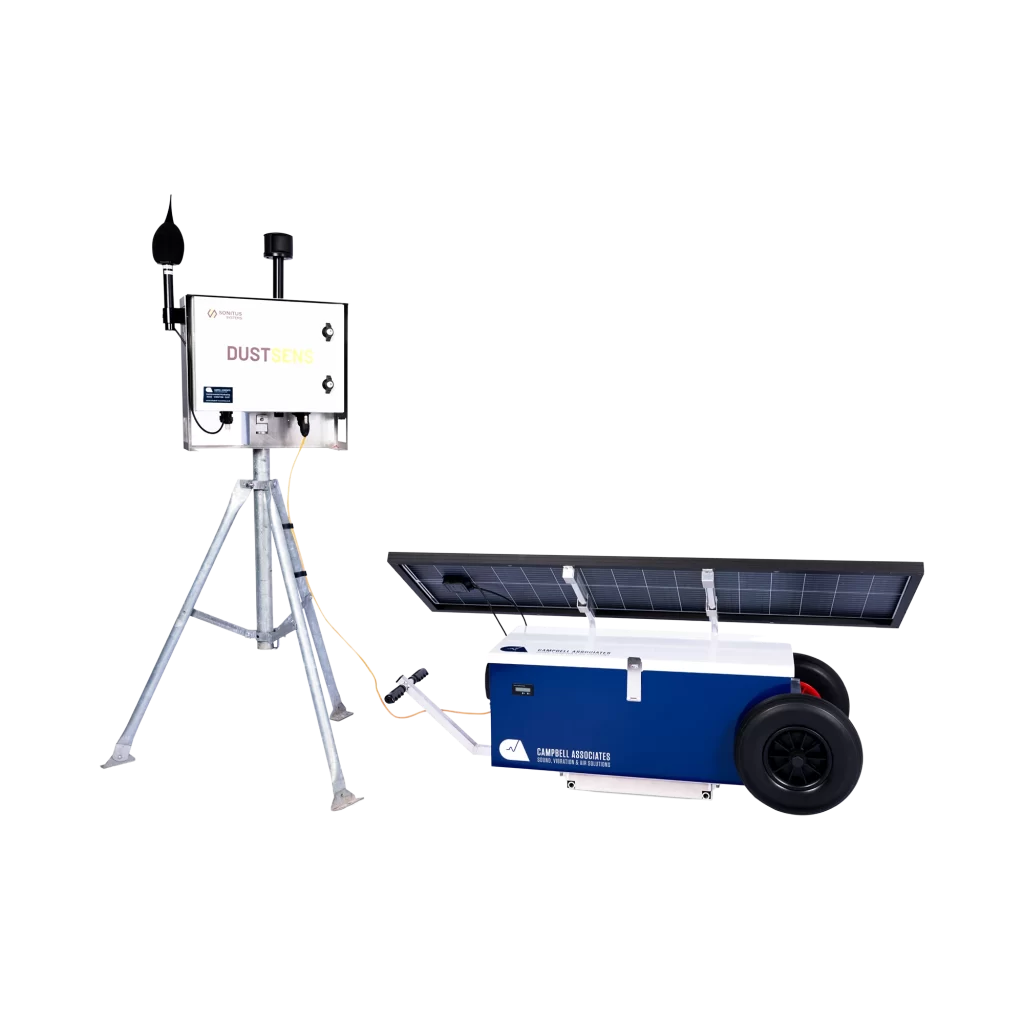
Combined environmental monitoring positions for noise and particulate measurements, helping reduce the site equipment footprint while keeping the project data together.
SiteSens – Noise, Dust & Weather Monitor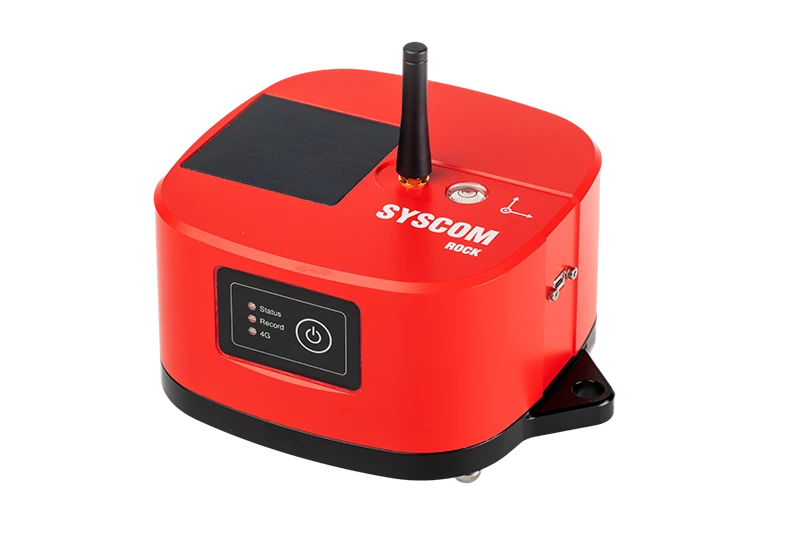
Discreet vibration monitoring to BS-5228-2 for buildings, structures and utilities during demolition, piling, breaking, excavation and construction activity.
RockSens – Vibration Monitor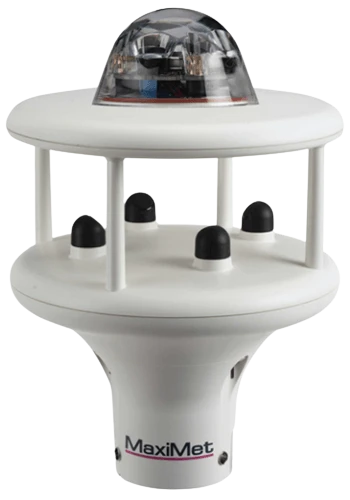
Local meteorological monitoring to add context to environmental measurements and changing site conditions.
WindSens – Weather Station
Structural movement and crack monitoring at sensitive buildings and structures affected by demolition, excavation and adjacent construction work.
ElliTrack – Crack Monitor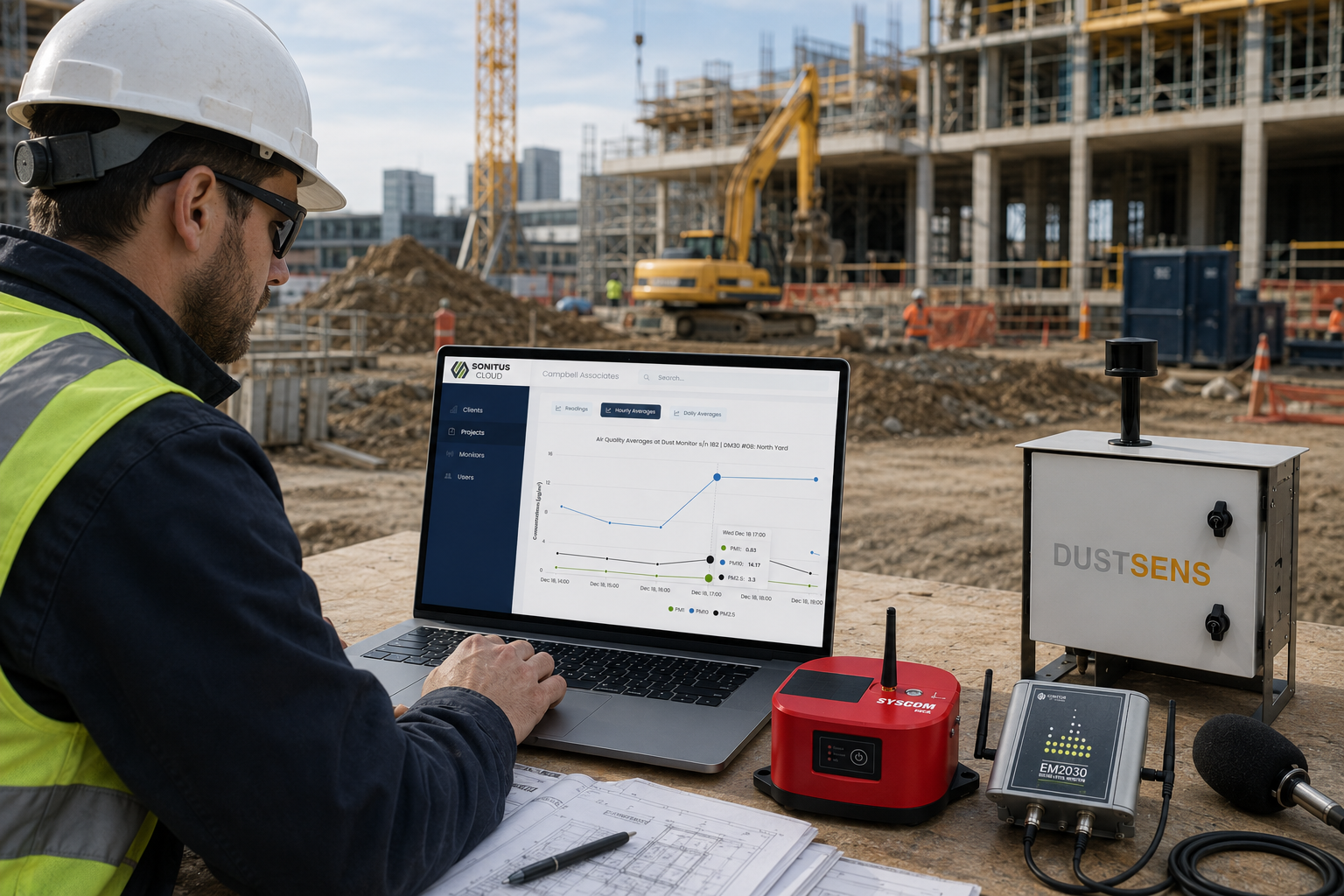
Bring compatible monitoring locations together in one web based project portal.
Sonitus Cloud
Our field engineering team can support installation, commissioning, relocation, servicing and decommissioning throughout construction and demolition projects.
Site Services
Scheduled weekly, monthly or project specific reports delivered automatically to nominated recipients.
Discuss this monitoring requirement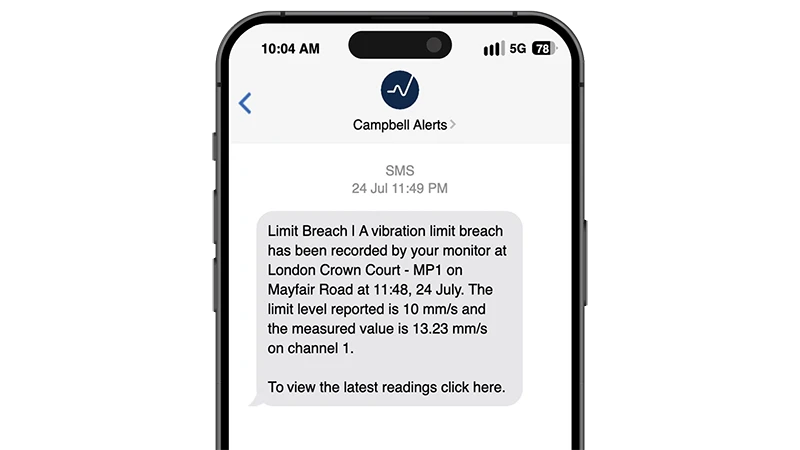
Configurable notifications for agreed trigger levels, connectivity issues and system conditions.
Discuss this monitoring requirement
Battery and solar power solutions for temporary and remote monitoring positions where a fixed mains connection is unavailable.<br />
Solar PowerHub S600Whether the project has three monitoring locations or thirty, compatible measurements can be centralised into one project environment for easier management, reporting and investigation.
A Section 61 consent, CEMP, SEMP, Dust Management Plan, local Code of Construction Practice or consultant monitoring specification may define where monitoring is required, what parameters need to be measured, applicable trigger or action levels and how data should be reported. Campbell Associates takes those agreed requirements and helps turn them into a practical site monitoring network.
Share the Section 61 consent, CEMP, DEMP, SEMP, local Code of Practice, Dust Management Plan or consultant monitoring specification so the monitoring package can be built around the project.
Review sensitive receptors, boundaries, access, security, available power, communications and the technical requirements of each measurement location.
Once the relevant trigger and action levels have been agreed by the project team, consultant or authority, configure compatible monitors, alert recipients and reporting outputs around those requirements.
View compatible monitoring data remotely, investigate events and distribute agreed automated or project-specific reports to the relevant stakeholders.

Local requirements differ. We configure the monitoring system around the project documentation, limits and reporting requirements supplied to us rather than applying generic thresholds from another site.
Monitoring configured to meet agreed noise and vibration limits.
Monitoring aligned with recognised construction noise and vibration guidance.
Monitoring and reporting tailored to your approved environmental plan.
Equipment, limits and reporting configured to local authority requirements.
Continuous dust monitoring against your agreed action levels.
A tailored system for your site risks, activities and stakeholders.
Pre-construction baseline monitoring can establish existing environmental conditions before significant works begin, giving the project team and appointed consultant a reference against which later construction related changes can be assessed. Baseline data can also provide useful evidence when appropriate trigger and action levels are being considered.
Trigger and action levels should be appropriate to the project, receptor and applicable consent, planning condition, Code of Construction Practice or monitoring strategy. Once the appropriate limits have been agreed by the project team, consultant or relevant authority, Campbell Associates can configure compatible monitoring systems and Sonitus Cloud accordingly.
Campbell Associates supplies monitoring systems to contractors, developers and environmental or acoustic consultants. Where a consultant has prepared the Section 61 application, CEMP, SEMP, environmental assessment or monitoring specification, our role is to provide, install and configure the monitoring equipment needed to implement it. Your consultant can remain responsible for assessment and interpretation while Campbell Associates manages the instrumentation, connectivity, cloud platform and technical operation of the monitoring network.
Sonitus Cloud provides a central location for compatible project environmental monitoring data. Noise, vibration and other supported systems can be viewed remotely without repeatedly visiting individual monitoring locations.

Monitoring equipment is only one part of a successful environmental monitoring programme. Campbell Associates can support the monitoring network from initial planning and installation through to maintenance, relocation, reporting support and eventual decommissioning.
Review monitoring locations, access, power and communications.
Field engineers install and commission the monitoring network.
Compatible monitoring locations are configured within the project cloud environment.
Measurements, alerts and system status can be reviewed remotely.
Our engineers can attend when equipment needs servicing or relocation.
Automated and project specific reporting keeps stakeholders informed.<br />
At the end of the programme, the network can be removed cleanly.

Our field engineering team can support installation, commissioning, relocation, servicing and decommissioning throughout the project.
Compatible monitoring data can be compiled into scheduled project reports and distributed to nominated stakeholders, reducing repetitive manual administration and keeping project information accessible.
Configurable alerts can help project teams identify elevated measurements and investigate potential environmental events more quickly. Alert thresholds should reflect the limits agreed for the project rather than generic values copied from another site.
Explore selected monitoring products used within construction and demolition monitoring systems.


Keep project monitoring equipment supported and calibrated through the relevant Campbell Associates laboratory services.
Supporting contractors, consultants and project teams across construction, demolition and infrastructure monitoring.


Use our technical articles to understand Section 61, baseline monitoring, monitor positioning and practical construction monitoring considerations.

MCERTS-certified indicative dust monitors are widely specified for construction projects across the UK. However, are all MCERTS monitors truly suitable for construction applications? The MCERTS indicative certification is primarily achieved through comparative measurements against reference-grade instruments in background (ambient) locations. To gain certification, a sample of instruments must demonstrate good long-term correlation with the reference […]
Read article ›
Campbell Associates have been assisting civil engineer giants Keltbray with their environmental monitoring with their demolition and clearing of the power stations at Ferrybridge, West Yorkshire. The coal-fired towers were situated on the River Aire in West Yorkshire, next to the junction of the M62 and A1 motorways. They will have been a looming landmark […]
Read article ›
For construction and demolition firms in the UK, navigating the Control of Pollution Act 1974 is a critical component of project delivery. Specifically, securing a Section 61 consent is the gold standard for proactive site management. It not only protects your project from the risk of a Section 60 stop-work notice but also demonstrates your […]
Read article ›
Setting Noise Limits and Thresholds for UK construction Sites – Including ABC Method BS 5228-1: 2009 Code of Practice for noise and vibration control on construction and open sites BS 5228-1 code of practice is the guidance to which UK professional manage noise related to construction projects. Setting the noise limits and thresholds requires some […]
Read article ›Browse more practical guidance on Section 61, baseline monitoring, monitor positioning, dust, vibration, noise and construction environmental monitoring.
Choose the monitoring you need, tell us roughly how long the project will run and add the key site details. We will turn your selections into a project brief that you can carry into the enquiry form below.
Construction monitoring measures noise, dust, vibration, weather and structural movement to help manage environmental impacts, protect nearby properties and demonstrate compliance.
Requirements depend on the project, but commonly include noise, vibration, dust, weather conditions and structural movement.
Monitoring may be required by planning conditions, a Section 61 consent, an environmental management plan, a local authority code of practice or the project specification.
Baseline monitoring should ideally begin before construction or demolition work starts. This establishes existing conditions and provides a reliable comparison for later results.
Yes. Compatible systems can issue automated alerts when agreed noise, dust or vibration levels are approached or exceeded.
Yes. Compatible equipment can connect to Sonitus Cloud, allowing authorised users to view live data, alerts, reports and monitoring locations remotely.
Yes. We can supply, install, commission and manage monitoring equipment, provide technical support and assist with reporting throughout the project.
Yes. Time stamped monitoring data can be reviewed alongside site activities to help assess complaints and identify likely causes.
An alert can be sent to nominated contacts so the result can be reviewed against site activity, weather conditions and any applicable action levels.
Campbell Associates can review your planning conditions, Section 61 consent, environmental management plan or project specification and recommend a suitable monitoring system.
Give us the project location, anticipated monitoring duration and the environmental parameters you need to monitor. Our team can help configure an appropriate monitoring solution around the requirements supplied for the project.
Monitoring implementation note: Campbell Associates configures monitoring equipment, alerts and reporting around the requirements and limits supplied or agreed for the project. Formal acoustic, environmental, planning or Section 61 consultancy should remain with the appointed competent consultant or project specialist where required.


