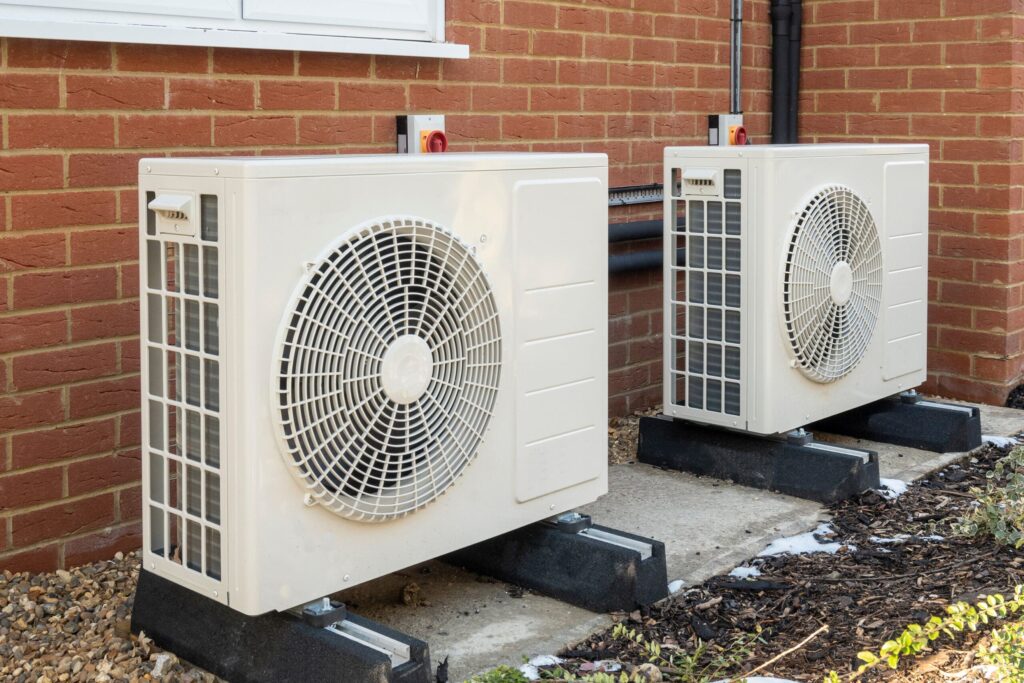
As the UK government accelerates its drive toward net zero emissions, the familiar hum of the gas boiler is rapidly being replaced by the whir of the air source heat pump (ASHP). Once a niche technology, heat pumps are fast becoming standard features across UK housing, particularly in modern new-build developments.
Yet, as these eco-friendly units multiply, local authority Environmental Health departments are finding themselves refereeing a new breed of neighbourly friction.
For the first time, the Chartered Institute of Environmental Health (CIEH) officially began tracking heat pump complaints as an independent category. Their data revealed that UK local authorities received 103 formal noise complaints over the 12-month period spanning 1 October 2024 to 30 September 2025. While 103 complaints represent just a tiny fraction of the hundreds of thousands of noise nuisances handled by councils every year, the figure marks the beginning of a distinct, upward trend.
On paper, the UK has strict safeguards to prevent heat pumps from becoming a acoustic menace. Under Permitted Development rules, a heat pump installation is only exempt from full planning permission if its calculated sound level does not exceed 42 dB at the position of the nearest neighbour’s window.
To put that in perspective, 42 dB is roughly equivalent to a quiet library or a gentle hum of a household refrigerator.
If the technology is legally mandated to be that quiet, the unit itself is rarely the problem. Instead, the friction arises because standard decibel testing measures overall sound pressure (dB(A)), which mimics human hearing by heavily filtering out very low pitches. What a standard sound test deems acceptable can feel entirely different to a neighbour trying to sleep on the other side of a party wall.
The true culprits behind council complaints usually boil down to two distinct acoustic phenomena: tonal noise and structural vibration.
The Low-Frequency Hum (Tonal Noise)
Unlike the random, rushing sound of wind or rain, a heat pump’s compressor and large fan blades emit what acoustics experts call tonal noise. This is a steady, continuous drone that typically oscillates at a low frequency between 50 Hz and 60 Hz.
Low-frequency sounds possess immense physical power. While high-pitched noises (like a television or a conversation) are easily deflected by standard brickwork and double-glazed windows, low-frequency waves pass right through them. The glass in a neighbour’s window can begin to resonate in sympathy with the 50 Hz drone, effectively transmitting a dull, bass-heavy hum straight into their bedroom.
Structure-Borne Vibration
Perhaps the most avoidable -yet most common cause of complaints is poor installation practice. A heat pump is a heavy piece of machinery containing a powerful, spinning motor. If an installer bolts the unit directly onto a residential brick wall, a timber-framed extension, or a flat roof without the correct mitigation, the entire structure suffers.
Without thick, high-quality rubber anti-vibration mounts or dedicated ground-mounted concrete plinths, the mechanical energy transfers directly into the building’s fabric. The walls of the property essentially act like a giant loudspeaker cone, amplifying the physical movement of the pump. Inside the house, this doesn’t sound like air; it manifests as an incredibly irritating, chest-thumping vibration that can be felt as much as it is heard.
For local authorities, resolving these disputes is a delicate balancing act. If a council investigation determines that a heat pump is causing a statutory nuisance under the Environmental Protection Act 1990, they are legally obligated to intervene.
Crucially, statutory nuisance looks at the real-world impact on a resident’s well-being, meaning a heat pump can be found at fault even if it technically passed the 42 dB planning assessment upon installation. When a nuisance is confirmed, councils can issue a legally binding Abatement Notice. This forces the homeowner to take immediate, often expensive corrective action—whether that means constructing specialized acoustic fencing, retrofitting heavy-duty dampening feet, or paying thousands to relocate the entire unit to the other side of the property.
As the UK marches steadily toward its net zero targets, the CIEH data serves as an early warning system. Achieving a green transition requires more than just swapping out old machinery; it demands rigorous installation standards, careful spatial design, and an understanding that keeping the planet warm shouldn’t come at the cost of the neighbourhood’s peace and quiet.
In the planning stages, developers and acoustic consultants can lean on noise prediction software like CadnaA to anticipate and mitigate acoustic risks, saving developers and buyers from future legal headaches.
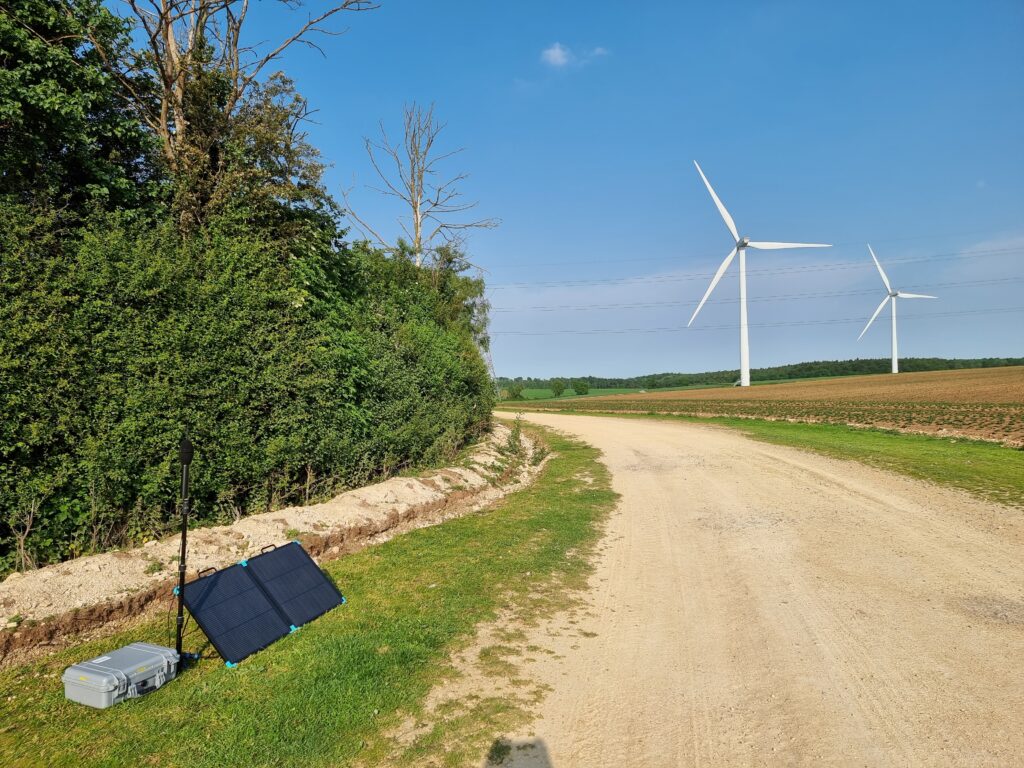
But for Environmental Health Officers investigating complaints under the Environmental Protection Act 1990, resolving noise issues is rarely straightforward. EHOs must first map out the local environment’s natural baseline sound levels before measuring the heat pump at its loudest—usually during the depths of winter. Conducting these precise evaluations demands a reliable, fully calibrated Class 1 sound level meter, such as the Larson Davis 821. Furthermore, if a dispute requires long-term tracking, officers may need to deploy unattended meters for several days to capture a truly accurate baseline. The Larson Davies 821 with solar panel has proven to be reliable and accurate in these scenarios.