Noise Archives | Campbell Associates

Reviving the Sound Level Indicator (SLI)

Noise

Our director Ian Campbell MSc, FIOA has spent his career working in the acoustic industry and has written a full technical report on reviving the sound level indicator. A shortened version can be read below, see the full report at the bottom on this post.

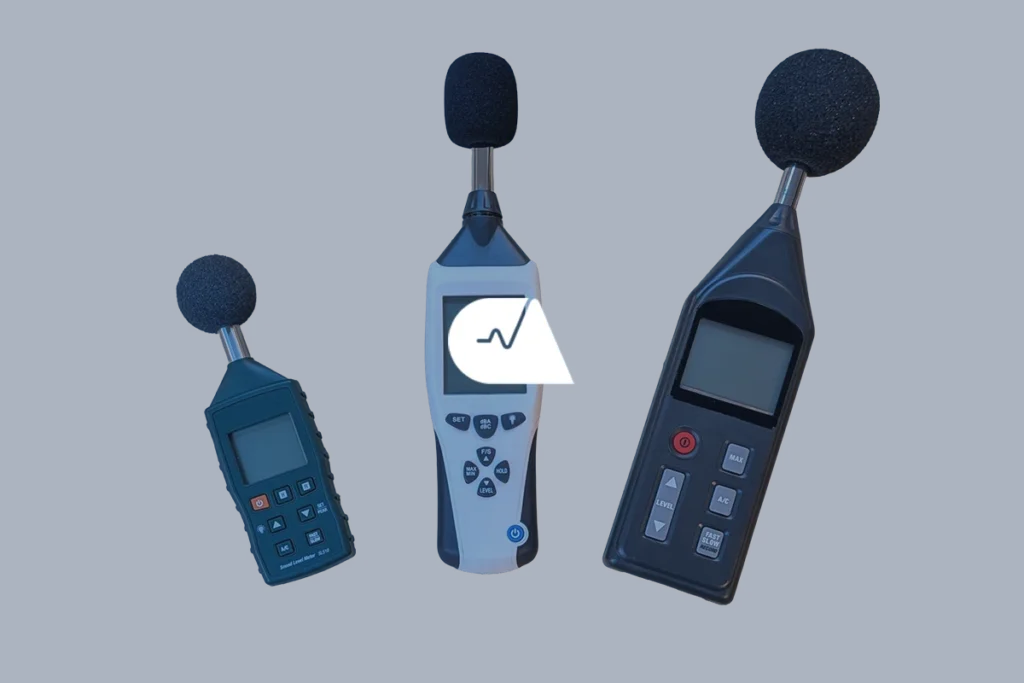
While modern standards like BS 61672 introduced high-precision engineering and precision instruments in 2002 , the older Grade 3 Sound Level Indicators (SLIs) are far from extinct. In fact, the market is currently flooded with models ranging from under £100 to over £500. However, because these devices have been absent from official quality control standards for over 25 years, users must be diligent about the uncertainty of the results they provide.

The Precision Gap

The primary risk with SLIs is specification creep, where manufacturers make vague claims about conforming to British Standards that can easily be misunderstood by beginners. Unlike professional Sound Level Meters (SLMs), SLIs rarely come with a sound calibrator. Without this reference tool to set the device to the international standard of 94 dB, any natural drift caused by the environment or time goes completely unnoticed.

Understanding High-Frequency Errors

A major technical hurdle involves how sound interacts with the device itself. To ensure a flat response in an open free-field, microphone designers actually engineer the microphone’s internal pressure response to fall off at higher frequencies. While this works perfectly in open air, it causes the SLI to significantly under-report decibel levels when checked with a standard closed-cavity calibrator.

Furthermore, the physical body of the SLI reflects sound waves, creating interference that further distorts measurements. While professional SLM manufacturers provide complex correction tables to account for these reflections, such data is rarely available for budget SLIs.

A Sustainable Calibration Path

To bridge this gap economically, owners should consider an initial free-field calibration in an anechoic chamber. This one-time test captures the combined effects of the microphone and case reflections, providing the necessary data to calculate corrections. Once this baseline is established, future re-calibrations can be performed using lower-cost pressure methods while maintaining technical integrity.

Calibration PhaseEstimated CostTechnical Benefit
Initial Free-Field£225Documents exact case and frequency corrections.
Annual Pressure£140Ensures alignment to the international dB scale.

Ultimately, while SLIs lack the stability and dynamic range of professional meters, they remain a valuable entry point for noise measurement if their limitations are managed through proper, recorded calibration.

Full report:

Noise Nuisance Investigation

Environmental Health

Sound level meters are used in noise nuisance and domestic environments to assist with resolving complaints between neighbours. These instruments are deployed by housing officers within local authorities and housing associations to record and capture noise events as evidential material where a disturbance is alleged.

The systems are commonly referred to as noise nuisance recorders or noise monitoring kits. They are typically based on established sound level meter platforms such as the Norsonic Nor140 or Nor145 NNR kits and the Larson Davis 821 SoundExpert NNR kit, supplied exclusively in the United Kingdom by Campbell Associates. The abbreviation NNR has become widely adopted as a general term for this type of equipment.

Noise recordings are supported by event logs completed by the resident, which accompany each captured event. The devices log sound pressure levels in decibels to assess the impact and pattern of noise. As measurements are taken within the complainant’s property, background levels are often relatively low, meaning internal sounds may also be detected. For this reason, audio recordings are essential to assist with identifying the source of disturbance, such as dog barking, amplified music or raised voices.

With a plotted noise trace and synchronised audio recording, it is possible to visually examine changes in sound level over time and describe frequency characteristics. Low frequency content is often emphasised in frequency analysis displays when music is present, while impulsive sounds such as dog barking appear as sharp spikes in the level trace.

NNR Kit 821 SoundExpert

Modern instruments use sophisticated pre trigger technology to capture audio prior to the moment the resident presses the event trigger. This ensures that the build-up to the disturbance is recorded, even if there is a delay in activation. By the time the resident attends to the instrument and presses the trigger button, the relevant event has already been captured, thereby strengthening the evidential quality of the recording and improving reliability in reporting and investigation.

It is critical that equipment is not only technically advanced but also simple to operate. The Larson Davis 821 SoundExpert NNR kit has been developed to provide a cost-effective solution for an industry operating within tight budgets, where reliable performance is required without the expense typically associated with high specification acoustic systems.

Demand for monitoring equipment has increased since the COVID pandemic, largely due to more people working from home and becoming more aware of neighbouring noise in domestic settings.

Background Noise and Audiometric Investigations – Acoustic Calibration

Noise

Are you Measuring Background or your Sound Level Meters Noise Floor?

Audiometric testing requires environments with very low background noise to avoid two major problems:

  1. Patient distraction, and
  2. Masking or corrupting the test signals.

Because human perception of sound is strongly contextual and subjective, clinicians cannot reliably judge an environment’s suitability without objective sound level measurements.

The strictest requirements are for measurements down to 0 dB HL with open ears, whereas screening with enclosed headsets at thresholds above – 30 dB HL allows much more background noise. It’s prudent, however, to start by examining the most demanding case.


Sound Level Meter Requirements and Self-Generated Noise

Every sound level meter has a self-generated noise floor that limits the lowest measurable level. It comes from:

  • Electrical noise (thermal noise in electronics), typically at low frequencies.
  • Acoustic noise (Brownian motion acting on the microphone diaphragm), dominating higher frequencies.

Since noise adds energetically, the error becomes:

  • Negligible if background noise is >20 dB above the noise floor
  • +0.4 dB error when the difference is 10 dB
  • +3 dB error when the background is equal to the noise floor

Thus, the meter’s noise floor should be at least 10 dB below the lowest background noise level you need to verify.


Calibration and Interpretation

Accredited calibration reports normally show two self-noise measurements:

1. Complete instrument with microphone attached (dB(A))

This includes both electromagnetic and acoustic self-noise plus unknown residual noise in the “quiet” calibration room.

2. Electrical self-noise using a dummy microphone

Reported for A-, C-, and Z-weightings, allowing assessment of frequency-dependent behaviour.
Typically:

  • A-weighted noise is lowest, because A-weighting attenuates low frequencies
  • Z or C-weighted values are higher, because electrical noise is mainly low-frequency

Calibration standards do not impose pass/fail criteria for self-noise; they only require reporting. Meters naturally get noisier with age and environmental stress. The technician must therefore:

  • Know the instrument’s noise floor
  • Understand that the calibration figure includes ambient noise from the test room
  • Recognise that the real noise floor may be higher than the reported one

Audiology-Specific Requirements: Third-Octave Bands

Standard calibration reports use broadband frequency weightings, but audiology requires third-octave band criteria, as specified in:

  • BS 8253-2:2009, and
  • BSA Guidance

Therefore:

  • A third-octave band SLM is essential, and
  • Self-generated noise values must also be given per third-octave band and calibrated to verify compliance.

Enhanced calibration services can measure and report the SLM’s true third-octave noise floor, enabling direct comparison with audiometric room criteria. Typical results shown below:

Recommended background noise level for 0 dB HL audiometry and the verified LASmax of a reference class 1 sound level meter showing the -10 dB signal to noise can easily be obtained.

Campbell Associates supply sound level meters and audiometer calibration hardware, software and have an independent UKAS accredited calibration laboratory (0789) for acoustic and audiometer test equipment.

CadnaB Overview

Noise

Datakustik Cadna

Calculation Standards

The following standards are implemented in CadnaB:

  • ISO 12354: Calculation of airborne and impact sound insulation between rooms as well as the airborne sound insulation against outdoor sound via the façade walls.
  • When using ISO 12354, following parameters can be calculated:
    • Performance parameters according to ISO 717-1 (airborne sound insulation) and ISO 717-2 (impact sound insulation)
    • ASTM-parameters (STC, OITC, IIC)
  • DIN 4109: Calculation of airborne and impact sound insulation between rooms as well as the airborne sound insulation against outdoor sound via the façade walls.

Handling and Modelling

CadnaB´s concept is based on the modelling of the whole building. Walls, doors, windows and other elements can be modelled in 2D while seeing the changes in 3D in realtime:

  • Numerous junction types are automatically detected by CadnaB depending on the geometry of the walls and the selected constructions.
  • In addition to the geometry of the walls and the assigned constructions, doors and  windows can be inserted with a few clicks. The construction of these elements is also selected via the construction browser.
  • Furthermore, airborne sound transmitting systems can be added.
  • Complete buildings can be imported, created from scratch or constructed by copying storeys.

Import of Bitmap floor plans

CadnaB supports the import of bitmap files, e.g. containing the floor map. Bitmaps can be comfortably calibrated within CadnaB. Afterwards, entire storeys with multiple rooms or even entire buildings can be easily modelled by drawing the elements on top.

Project Organization

The CadnaB workflow is organised in different modes. Each mode is suited for a certain group of tasks:

  • Project mode: used for entering new objects or modifying exiting objects. In this mode, any type of element can be filtered and displayed.
  • Constructions mode: This mode is used to assign constructions to walls, doors, windows or floors. When an object is opened, the construction browser appears showing all libraries.
  • Results mode: This mode allows to start the calculation, check the results and export a report.
  • Usage mode: In this mode you can assign different types of usage to the rooms within your project.
  • Noise levels: For defining sound levels for rooms or façade walls.

Import of BASTIAN worksheets

CadnaB provides an easy to use import of BASTIAN worksheets. The single room pair can be directly used for calculation (e.g. according to ISO 12354). If the user activates the compatibility mode to ISO 12354, series 2000, comparable results to BASTIAN can be generated.

Import of INSUL files

CadnaB also imports constructions generated by INSUL (Marshall Day Acoustics)*, as XML files. All data including the sketch are imported. For constructions with several parts, such as a slab with a screed, the user can select which one to import. 

*Option PRO required
*Requires exported XML files from INSUL version 9.0.24 or later

Interoperability with CadnaA

CadnaB-buildings can be placed in a CadnaA model with a few clicks to calculate the level in front of the façade. In case of ISO 12354, the interior level can be calculated based on the façade level with consideration of the building acoustic properties. When using DIN 4109, the “relevant exterior noise level” can be calculated and transferred to CadnaB.

Interoperability with CadnaR

  • Manage and organize CadnaR files for an entire building in CadnaB.
  • Use CadnaR in the sending and receiving room to consider the position of sources, receivers and obstacles inside the room. The transmission through the wall is calculated based on the building acoustic properties defined in CadnaB including selected constructions, doors or windows.
  • Automatic calculation of the spatially averaged reverberation time for all rooms which are linked to a CadnaR project.

The “Results” mode

The results mode allows you to check all calculated results, which are organized for every two adjacent rooms. This makes the fast-checking of any specific room pair within a building very intuitive.

  • Airborne and impact sound transmission results (single and 1/3 octave bands)
  • Partial results for separating element and flanks (single and 1/3 octave bands)
  • Information about junctions
  • Interior level results

The result types shown depend on the selected standard, the evaluation parameters and the transmission situation.

Auralization*

In CadnaB, the result of the calculation can be made audible with the help of binaural auralization. This allows the user to imagine the effect of a construc­tional measure. For this purpose, a source in the form of an audio file is sim­ulated in the sending room or in front of the facade, which is then reduced by the calculated sound reduction index.

*Option PRO required

Fulfillment of requirements

In addition to the numerical results, CadnaB allows the inclusion of requirements according to national or local standards. Many predefined requirements are available within the requirements browser. You can then check whether any room pair fulfills the requirement or not by means of comprehensive visual icons.

Export of results

CadnaB can export:

  • Full project reports to MS Word format (.docx).
  • List of constructions into MS Word (.docx)
  • Calculation protocol to MS Excel (.xlsx)
  • Object tables to text format (.csv)

Overview of CadnaA Industry

Noise

CadnaA Industry is especially designed for acousticians specialized in industrial installations. Applications range from the calculation of industrial sites, wind farms or mining plants to HVACs, PAGA systems or even open air events. In addition to the extensive functions for modelling, assessment and presentation of CadnaA, the product CadnaA Industry includes the following industry-specific features:

  • All calculation standards for noise type Industry included.
  • Input of sources as point, line or area with many options to define emission such as corrections, directivity, operating time and many more.
  • Easy import of emission data as .txt or .xlsx file, for example as sound power level (Lw) or indoor sound level (Li). The data is stored in a database and can be shared across multiple projects or users.
  • Extensive possibilities for project organization with the Object Tree. This enables the assessment of complex scenarios to determine relevant sources or source groups.
  • Definition of a 2D, 3D or rotationally symmetrical directivity, which is especially relevant for the calculation of loudspeakers used for PAGA systems or open air events.
  • Calculation of 1/3 octave band width (if supported by calculation standard).
  • Calculation of maximum levels for each receiver.
  • Convenient functions such as a calculator to add or subtract A/B/C/D weighting to an existing spectrum or to convert a 1/1 octave band spectrum to 1/3 (and vice versa).

Overview of CadnaR for industry acoustics

Noise

CadnaR provides powerful tools to efficiently manage any scenario, guiding you through the setup of your acoustic model and the assignment of appropriate absorption, scattering, and transmission properties. 

Whether optimizing an open-space office for a productive work environment or ensuring excellent speech intelligibility in a lecture hall, CadnaR enables you to assess acoustic quality using industry standards and advanced evaluation methods.

Key features of CadnaR include:

  • Cutting-edge calculation methods: particle model, image source model, hybrid model and more. Fast calculation times thanks to innovative technologies such the support of NVIDIA’s CUDA API.
  • Import and input of obstacle objects including barriers, box-type obstacles and polymeshes to allow any kind of complex room shape. Easy definition of the acoustic properties such as absorption, transmission and scattering.
  • Easy import of room geometries via DWG, DXF, SketchUp, IFC and from CadnaR.scan App.
  • Import your speakers in CadnaR, find their optimal position and alignment, calculate reverberation time, signal level, background noise levels and speech transmission index STI to ensure that these messages are intelligible in large public rooms.
  • Automatic calibration of absorption and scattering coefficients to achieve user-defined or measured target reverberation times.
  • Acoustic assessment of open-plan offices based on speech levels and reverberation time according to DIN 18041, ISO 3382-3 and VDI 2569 as well as innovative intelligibility-based approaches such as the STI-Matrix.
  • Extensive possibilities for project organization with the Object Tree and the use of variants. This allows to handle and compare different planning scenarios and therefore allows to find a tailored acoustic concept to improve the situation in your specific project.
  • Calculation of psychoacoustic parameters such reverberation time (T10, T20, T30), Speech Transmission Index (STI) and many more. Cutting edge auralisation techniques, including the effect of several sources at each receiver position. 

Measuring high noise levels at a clay pigeon shooting range

Noise

MEASURING HIGH NOISE LEVELS

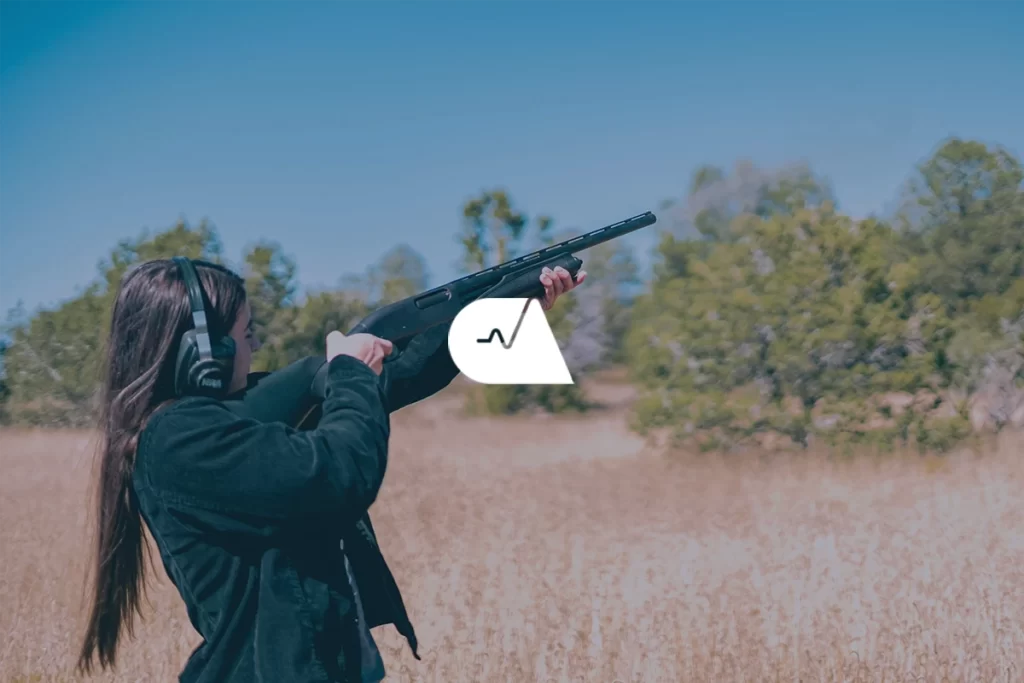
The Campbell Associates team attended a clay pigeon shooting range as part of an experiment to capture accurate high noise levels and sound pressure levels. Measurements were taken from various shotguns at a distance of 0.5m from the trigger, using a sound level meter designed for high sound pressure level measurement.

This type of noise measurement is sometimes required to assess the hearing protection used by individuals participating in gun-related leisure activities, where exposure to impulse noise can be significant.

The sound level meter used during the experiment was tested in three configurations to assess its suitability for high SPL measurement:

  1. The standard meter with a 140dB full-scale measurement range
  2. The standard meter in high-level mode, increasing the full-scale range to 150dB
  3. The standard meter fitted with a quarter-inch high-level microphone capsule, extending the measurement range to 160dB

The Results:

  1. In the standard measurement mode, the system frequently overloaded when the microphone was positioned closer than 1 metre from the gun being fired, highlighting the challenges of measuring extreme noise levels at shooting ranges.

Figure 1.

  1. How does a high range option work – How do you get an extra 10dB from a standard ½” microphone?

When the extended measurement range is activated, the standard 200V microphone has its polarisation voltage reduced from 200V to approximately 70V. This reduces microphone sensitivity by 10dB, allowing the instrument to measure peak sound pressure levels up to 150dB.

This change in polarisation voltage causes a small variation in the microphone’s frequency response. However, this is automatically compensated for when the high-range measurement mode is selected. Corrections are specific to each microphone type and should not be mixed when performing precision acoustic measurements.

With this option activated, most high noise level measurements were achievable using the sound level meter.

Figure 2

However, at a distance of 0.5 metres from the gun, particularly when using heavier shot, the sound level meter still experienced overloads, with measured levels exceeding 150dBc peak.

  1. Using a quarter inch microphone

With the use of an adaptor, a ¼” microphone can be fitted onto a standard ½” preamplifier, enabling measurements to be taken using a standard sound level meter.

Using this configuration, it was possible to measure peak noise levels without overload, with the highest recorded level reaching 157.9dBc peak.

Figure 3.

Why quarter inch microphones?

Quarter-inch microphones are inherently lower in sensitivity than ½” microphones. Their smaller diaphragm surface area makes them less flexible, meaning the same sound pressure produces a lower output voltage from the microphone capsule.

This reduced voltage output is highly desirable for very high sound pressure level measurements, as excessive signal voltages are the primary cause of overloads during extreme noise measurement.

How to measure beyond 160dB?

1/8” Microphone: Enables measurements up to 175dB, or up to 178dB when used with a 120V preamplifier supply.

Preamplifier Voltage: For extreme sound pressure level measurement, it is essential not only to use a low-sensitivity microphone but also a high-voltage preamplifier capable of handling large signal voltages without clipping.

Important cadnaa google maps interface update

Noise

  • New Google Maps Interface, based on Microsoft Edge (Chromium) browser.

Note from Campbell Associates regarding Google Maps bitmap imports:

Due to Google’s decision to discontinue API support for older browsers such as Internet Explorer, CadnaA users will experience issues importing bitmaps via Google Maps – this is because CadnaA utilises Internet Explorer internally as a virtual browser to open Google Maps.

Unfortunately, the deprecation of Google’s API is entirely outside of DataKustik’s control but has been resolved with this update.

CadnaA 2021

We have been informed that CadnaA 2021 should continue to support Google Maps imports until mid-August 2022, after which the internal browser will cease to function correctly.

Upgrading to version 2022 is advised ASAP to avoid issues in August.

CadnaA 2020 and prior

Older versions of CadnaA are no longer able to support Google Maps imports due to the above-mentioned API issue.

Upgrading to v2022 is required to continue using the Maps bitmap import feature.

Users with an active maintenance contract will be able to download this update without additional charge and are advised to do so at the earliest opportunity to avoid issues.

If you do not have an active Cadna maintenance contract, please contact Campbell Associates for upgrade pricing.

SiteSens Noise & Dust Monitor with MCERTS

Air Quality & Dust

The brilliant new system from Sonitus is designed to record Noise & Dust measurements at the same time AND PM10 & PM2.5 particulates are recorded simultaneously AND the dust monitor is certified to MCERTS indicative requirements – Impressive !!

Sonitus systems are a high-tech company founded by the acclaimed research department of Trinity College, Dublin. They are dedicated to smart solutions for accurate and highly automated monitoring applications.

The latest product from Sonitus is the DM30. This new monitor uses communication and processing technology from the established EM2030 noise monitor, which is designed from the bottom up as an automated monitor. The DM30 keeps the noise capability and adds dust/particulate monitoring to run in parallel. This dual functionality saves considerable cost, as a single monitor can do the job of two! This means a single cabinet, SIM card/ data subscription and a power connector.

The dust monitor provides accurate data which has been certified to MCERTS indicative requirements for both PM10 and PM2.5 and the system logs these channels simultaneously with PM1 (not MCERTS). The certification range is from 0 to 200 ug/m-3 for both PM2.5 and PM10 – which covers the limit of the construction code of practices. PM10 is the primary channel for construction dust monitoring but PM2.5 is now often asked for by local authorities on large scale projects.

To ensure the sensor and systems measure to the highest standards Sonitus have invested in a state-of-the-art test facility for air quality research, development, and ongoing calibration.

The DM30 has a built-in heater to dry the air sample before it goes through the particle counter. This ensures accurate measurements even in high humidity environments such as fog. Even with the heated inlet, efficient electronics make it possible to run the monitor on a 12v battery pack for a week or more – It also can be powered by solar and hydrogen generating systems.

The system is modular and can be ordered as a dust monitor or as a combined noise and dust monitor, and you can also integrate an anemometer for wind speed and direction. The DM30 automatically sends the data to Sonitus cloud for reporting, alerting and administration of your projects in an easy to manage platform.

Typically, noise and dust monitoring are required at the same location for construction projects and the DM30 saves space, money, and time.

Sonitus Systems ANI – Automated Noise Identification

Noise

Artificial intelligence is all around us, in the car, at home and possibly in the workplace, with services such as Siri and Alexa making life easier.

Using AI, Sonitus Systems have developed their audio capture option to accurately identify noise sources. No longer must site staff listen to noise recordings to establish the cause, ANI does it for them! The updated Sonitus Cloud system, powered by Amazon webservers will intelligently analyse each recording, to identify what type of noise it is. Audio recordings are labelled with their noise type and each category is quantified in clear and simple reports, ready to quickly and easily explain a noise breach. And to keep site staff fully informed, email alerts are sent every time a recording is made, or a trigger breached. All recordings can be played back on a smartphone, PC or tablet.

ANI – Automated Noise Identification is a game changer for demolition and construction site staff.

Noise identification is a problem for remote monitoring of construction and demolition sites because, without a human ear at the measurement point 24 hours a day, it can be difficult to establish the actual source of a noise breach – ANI solves it.

Construction sites situated in cities are normally surrounded by lots of non-related noise such as vehicle traffic, sirens, horns, bird calls, motorbikes and people, which could negatively affect the readings and the noise limits imposed on the site – ANI solves it.

If you are interested in hiring or purchasing a Sonitus Systems EM2030 noise monitor or SiteSens combined noise and dust monitor, contact us today.