Demolition Resources Archives | Campbell Associates

Why monitoring dust at night is essential on construction sites in the UK

Air Quality & Dust

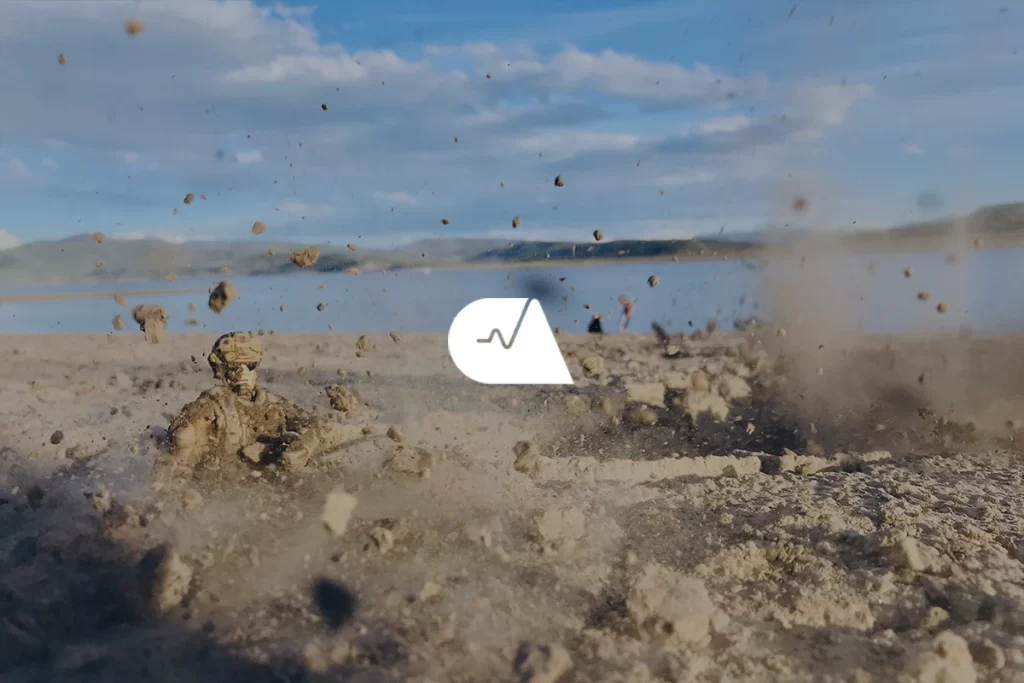
Construction activity may slow or stop overnight, but dust emissions do not simply switch off. In fact, certain night-time conditions can lead to elevated readings, making continuous monitoring just as important after dark as it is during the working day.

Understanding why this happens and how to manage it is key to protecting public health, maintaining compliance, and safeguarding a project’s reputation.

Why Dust Levels Can Rise at Night

1. Increased Wind Speeds in the Evening

It is not uncommon for wind speeds to increase after sunset. One important atmospheric phenomenon behind this is the nocturnal low level jet.

As the ground cools rapidly at night, the air close to the surface becomes stable and calm. This layer effectively decouples from stronger winds higher up. Without surface friction to slow them down, these higher altitude winds can accelerate and move closer to ground level.

When wind speed increases:

  • Dry dust piles are more easily disturbed
  • Exposed surfaces release fine particles
  • Previously deposited dust can be re suspended

Even if no active work is taking place, environmental conditions alone can drive emissions.

2. Drying of Surfaces

Evaporation can continue into the evening, particularly after a warm day. When combined with higher wind speeds, exposed materials dry out more quickly. Drier surfaces mean finer particles are more easily lifted into the air.

Without proper controls in place before leaving site, dust can become airborne overnight.

3. Early Morning Fog and Optical Monitors

In the early hours, fog events are common. Optical particle counters may detect water droplets because they are similar in size to dust particles. This can lead to elevated readings that do not represent true particulate pollution.

Water particles are inherently not a health risk in the same way as mineral dust, but they can affect data accuracy.

Modern monitoring technologies address this in two main ways:

  • Predictive algorithms that distinguish likely fog events
  • Heated inlets that dry incoming air, removing water droplets before measurement

By physically resolving the issue through air drying, readings more accurately reflect real dust concentrations.

Why Night Time Dust Still Matters

Airborne particles such as PM10 and smaller are hazardous to health. Fine particulate pollution contributes to respiratory and cardiovascular disease and is linked to over one hundred thousand early deaths each year in the United Kingdom.

Children and infants are particularly vulnerable.

The responsibility to control nuisance dust and protect health does not end when workers leave the site. Emissions continue to have an environmental impact throughout the night, affecting nearby residents and sensitive receptors.

Regulatory limits are often based on short averaging periods such as fifteen minutes or one hour. However, these limits do not negate the need for continuous oversight. A sustained moderate elevation overnight can still have environmental and reputational consequences.

Practical Controls Before Leaving Site

Effective dust management overnight starts with preparation. Site managers should ensure that appropriate controls are in place before work finishes for the day.

These include:

  • Covering dust piles
  • Wetting down exposed materials
  • Closing doors to contain internal areas
  • Installing barriers and hoarding to limit dispersion
  • Securing stockpiles against wind disturbance

Proactive management significantly reduces the risk of overnight exceedances.

The Value of Continuous Monitoring

Continuous dust monitoring provides visibility when the site is unattended. It allows managers to:

  • Identify patterns linked to wind speed and weather
  • Detect elevated night time concentrations
  • Assess the effectiveness of control measures
  • Plan improvements for future shifts

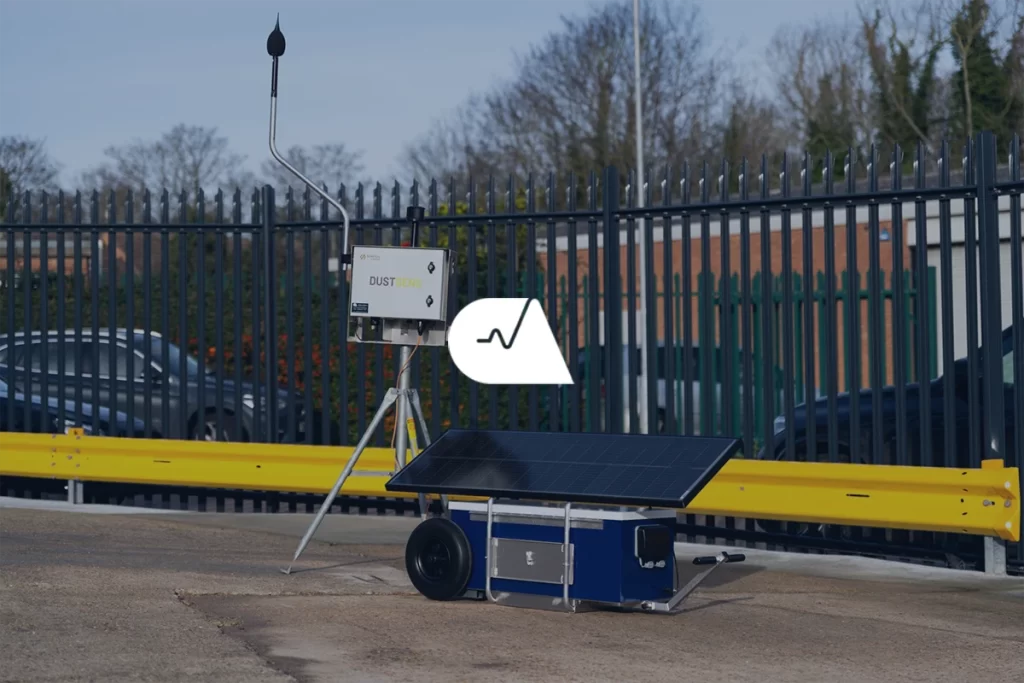
Systems such as the SiteSens and the DustSens DM30 from Campbell Associates enable reliable long term monitoring, including mitigation of fog related measurement issues through advanced technology.

Sonitus Systems SiteSens DustSens Site Engineer Weather Wind Tripod Environmental Outdoor

Where immediate night time alerts may not be practical, alternative strategies can be implemented. For example, lower thresholds can be applied over longer averaging periods to detect sustained elevated levels overnight. Alerts can then be delivered at the end of the monitoring window, allowing action to be taken the following morning.

Protecting Health, Environment and Reputation

Construction sites operate within communities. The duty of care to minimise nuisance and protect health continues twenty four hours a day.

Night time dust monitoring is not simply a regulatory exercise. It is a proactive approach to:

  • Safeguarding public health
  • Reducing environmental impact
  • Demonstrating responsible site management
  • Avoiding complaints and enforcement action

By combining robust controls with continuous monitoring and modern measurement technology, construction sites can ensure that dust is managed effectively at all hours.

Because dust does not stop when work does, neither should monitoring.

According to the World Health Organisation’s (WHO) Global Air Quality Guidelines:

Annual average for PM10: 15 micrograms per cubic metre (µg/m³)

24-hour average for PM10: 45 µg/m³

These are the guideline levels recommended to protect human health; they are not legally binding limits but serve as health-based benchmarks for air quality policy and planning.

The Institute of Air Quality Management (IAQM) guidance for construction and demolition sites does not prescribe fixed statutory UK air quality limit values for PM10 like those set for general ambient air (eg World Health Organisation or national objectives). Instead, it focuses on best practice dust risk assessment, monitoring and action trigger levels to manage dust emissions from sites.

Action trigger levels / monitoring guidance

For sites assessed as medium or high risk of dust impact, the IAQM’s monitoring guidance (2018 document Guidance on Air Quality Monitoring in the Vicinity of Demolition and Construction Sites) recommends real time PM10 monitoring with site-specific action levels or, where a generic level is used, a trigger level of 190 µg/m³ (one hour mean) to prompt investigation and corrective action. Monitoring should be proportional to the assessed risk and agreed with the local authority.

Read more about IAQM’s position on low cost dust sensors here.

Off-Grid Environmental Monitoring: Powering Compliance through Solar and Battery Innovation

Construction Resources

From meeting your sustainability and Net Zero targets to simply having no mains power, there are multiple reasons why UK construction and demolition sites require off-grid power. Off-grid renewable energy systems, specifically solar-plus-storage solutions offer a robust method for powering noise, vibration, and dust monitoring equipment. To maintain compliance with Section 61 requirements, sites must ensure an uninterrupted power supply to facilitate continuous, reliable environmental data collection.

Overcoming the UK Climate

While solar power is the gold standard for sustainability, the British weather is famously temperamental. For construction sites, intermittent power is not an option; a gap in data can lead to a breach of Section 61 consent and potential site shutdowns. At Campbell Associates, our philosophy is centred on Solar-Plus-Storage. By pairing high-efficiency panels with high-capacity, intelligent battery systems, we enable sites to bridge the gap between sunny spells and the inevitable grey weeks of a UK winter.

The OGRE PS300: High-Capacity Power for Demanding Sites

For projects requiring maximum autonomy, the OGRE PS300 (Off-Grid Renewable Energy) system stands as the powerhouse of our range. Engineered specifically to handle the higher energy demands of dust monitors and multi-unit setups, the PS300 features a high-output 300W solar array paired with a substantial 2kWh LiFePO4 battery. This combination provides a massive energy reserve, ensuring your monitoring remains live even during the darkest months. Housed in a rugged, powder-coated steel enclosure, the unit is built for the harshest site conditions. It also features our signature security-focused design: a detachable wheel and handle system that allows for easy deployment, which can then be removed to create a tamper-proof, static installation.

Intelligent Battery Technology

To meet rigorous site demands, our solutions, including the Solar Power Hub, are engineered specifically for the continuous, low-wattage draw of environmental monitors like the NoiseSens and VibrationSens units. Key features include:

  • LiFePO4 Technology: We utilise Lithium Iron Phosphate (LiFePO4) for its superior stability and longevity. These batteries thrive in fluctuating UK temperatures (from -20°C to +60°C) without losing efficiency.
  • Bi-Facial Solar Panels: To capture every drop of energy on overcast days, our bi-facial panels collect sunlight from both sides—including light reflected off the ground.
  • Smart Monitoring: Our systems include Bluetooth-enabled controllers, allowing site managers to monitor power levels in real-time via an app.

Seamless Compliance with the Sonitus Cloud

Power is only half the battle; the data is the prize. All our power solutions are designed to work hand-in-hand with our automated monitoring range. When powered by our off-grid systems, monitors report 24/7 to the Sonitus Cloud.

This ecosystem ensures that even on the most remote demolition site, you have a live view of your environmental impact. You get the data you need for compliance, the peace of mind that your equipment will not fail overnight, and the satisfaction of significantly reducing your site’s carbon footprint by removing the need for noisy, high-emission diesel generators.

Conclusion

Transitioning to off-grid solar and battery power is no longer just a green luxury, it is a logistical necessity for modern UK construction. By utilising Campbell Associates’ robust battery solutions, contractors can ensure that their commitment to the environment matches their commitment to project timelines and regulatory excellence.

Why you should be monitoring NO2 emissions on construction and demolition sites now.

Air Quality & Dust

CONSTRUCTION SITES AND NO2

It is well known that construction and demolition sites can generate and emit many different forms of pollution, the most obvious being material waste, visible dust, noise and vibration. However, construction sites also produce less obvious pollutants that are of serious concern for human health and have a wider environmental impact. Two of these pollutants are the gas nitrogen dioxide (NO2) and fine dust particles known as particulate matter (PM).

It is estimated that in London, NRMM (Non-Road Mobile Machinery) contributes to 7% of NOx, 14% of PM2.5 and 8% of PM10, and it is believed that a similar contribution exists across other major UK conurbations. This highlights the growing importance of construction site air quality monitoring.

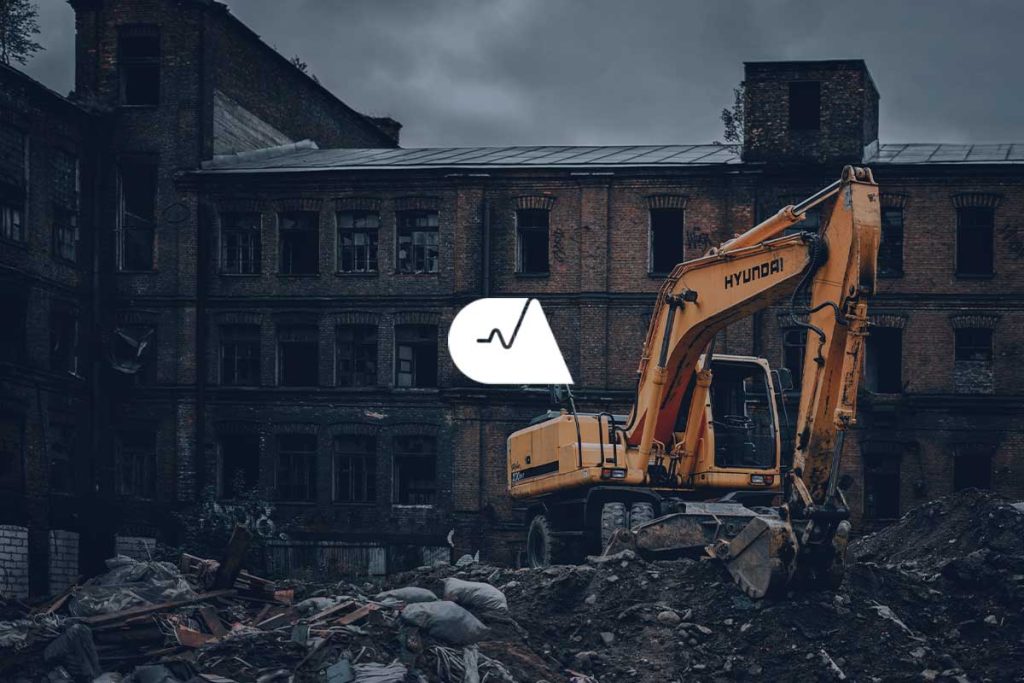
NRMM used on construction sites generates NO2 emissions from diesel or gasoline-fuelled engines, including trucks, excavators, loaders, bulldozers, mobile cranes, off-road machinery and static engines such as pumps and electricity generators. Idling engines are a significant contributor to NRMM emissions and personal exposure to PM2.5, PM10 and nitrogen dioxide (NO2).

It is estimated that 15% of diesel fuel consumed annually in the UK is associated with NRMM, equating to approximately 4 billion litres, reinforcing the need for effective air quality monitoring on construction sites.

HOW IS NO2 GENERATED?

The combustion of fossil fuels produces oxides of nitrogen (NO2). NOx is primarily made up of nitric oxide (NO) and nitrogen dioxide (NO2). NO2 is of most concern due to its impact of health. However NO easily converts to NO2 in the air – so to reduce concentration of NO2 it is essential to control emissions of NOx. National ambient air quality standards set NO2 as a criteria pollutant and indicator of the larger group of nitrogen oxides.

HEALTH EFFECT OF NO2

Scientific evidence links short-term NO2 exposure with adverse respiratory effects, including airway inflammation in healthy individuals and increased respiratory symptoms in people with asthma. Studies have also shown a clear association between short-term exposure and increased hospital admissions for respiratory illnesses.

In addition to contributing to ground-level ozone formation and its effects on the respiratory system, NOx reacts with ammonia, moisture and other compounds to form fine particulate matter. These particles can penetrate deeply into sensitive areas of the lungs, increasing long-term health risks.

Recent research shows that children exposed to diesel-dominated air pollution in London exhibit reduced lung capacity, placing them at risk of lifelong breathing disorders. This study was led by King’s College London, Queen Mary University of London and the University of Edinburgh, underlining the public health importance of monitoring NO2 emissions from construction activity.

WHAT IS NEW IN NO2 MEASUREMENT?

Aeroqual provides real-time dust sentry monitors for accurate measurement of dust and particulate matter (PM), which are widely used across the UK on construction sites. These monitoring systems can now be upgraded to provide real-time NO2 monitoring, allowing nitrogen dioxide measurements to be captured alongside dust and particulates.

The systems use advanced patented sensors and an active pumped airflow to sample NO2 at near-reference standards, providing a reliable picture of key air pollutants on construction sites. Monitoring data is uploaded to the cloud every minute, enabling continuous alerting, reporting and compliance monitoring.

Historically, diffusion tubes have been used to measure NO2 concentrations in surrounding communities. These passive devices typically measure average concentrations over a one-month period. However, NO2 monitoring on construction sites often requires hourly data, particularly during working hours, making diffusion tubes unsuitable for active site management.

These limitations make real-time NO2 monitoring systems an increasingly attractive and effective solution for construction and demolition projects.

Newer dust sentry and profiler monitors can now be upgraded, while purpose-built air quality stations (AQS) can be purchased or hired today. For more information on NO2 monitoring and construction site air quality, please contact Campbell Associates.

Syscom Rock vibration monitor put through its paces

Construction Resources

Syscom Blog Image

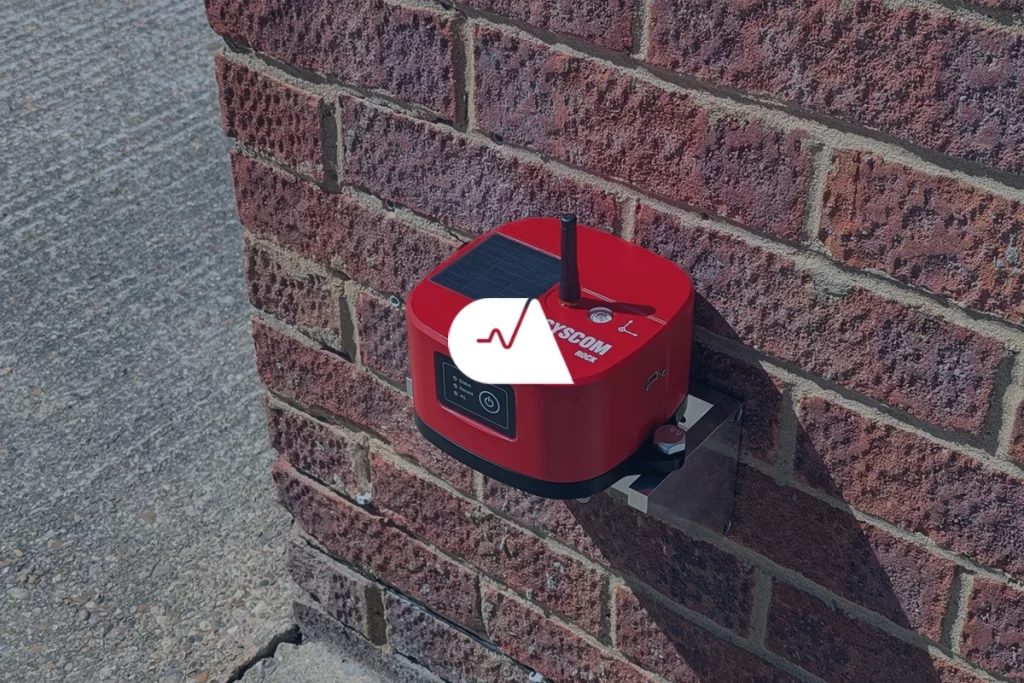
At Campbell Associates, we are committed to providing the UK’s construction, demolition & acoustic industries with the most advanced and reliable environmental monitoring solutions. That’s why we were thrilled to showcase the power of our new Syscom Rock Vibration Monitor at the recent Institute of Acoustics meeting on “Measurement, Prediction and Assessment of Ground Borne Vibration.”

We seized the opportunity to put the Syscom Rock through its paces in a live, practical demonstration, highlighting its exceptional capabilities in real-world scenarios.

Putting the Rock to Work: A Live Demonstration

The practical session involved meticulously testing the vibration emitted by Geomatrix Ltd’s innovative system – a device renowned for assessing ground stiffness by emitting a precise sweep of frequencies (5Hz to 300Hz). This is crucial for understanding how vibration propagates, especially in complex urban areas where drilling, piling, and demolition are needed near sensitive structures.

Our new Syscom Rock monitor was strategically placed just 10 meters from the vibration source, alongside other leading systems, to meticulously measure ground-borne vibration across multiple cycles.

Real-Time Data, Real-World Insights with Sonitus Cloud

One of the Syscom Rock’s standout features is its seamless integration with the Syscom Cloud platform. As vibrations were generated, data was transferred in real-time, allowing us to immediately visualise critical insights. We demonstrated how background vibration levels were instantly displayed in X, Y, and Z directions, with clear indications of peak levels as the vibration source was activated and then scaled down.

The detailed signal files instantly revealed nuanced behaviours, such as the X and Y directions peaking earlier at a 30Hz frequency, indicating an observed decoupling effect of the machine. The Z direction, by contrast, peaked at 50Hz. This level of precise, real-time data empowers our clients to truly understand vibration propagation and make informed, proactive decisions on site.

Engineered for Efficiency: Solar Power & Single-Button Simplicity

Decision-makers in construction and demolition demand reliability and ease of use. The Syscom Rock delivers:

  • Exceptional Power Efficiency: Powered by a compact, integrated solar panel, the Rock ensures continuous monitoring with minimal power consumption, even in remote locations.
  • Effortless Setup: Its intuitive design means simple, single-button operation to initiate measurements, getting you up and running quickly with minimal training.

Secure Your Site’s Future with the Syscom Rock.

The Syscom Rock Vibration Monitor is more than just a device; it’s your solution for robust compliance, enhanced safety, and unparalleled insight into ground-borne vibration. Available or purchase and hire within the UK.

Peak particle velocity – why do we monitor it?

Construction Resources

With increasing activities in and around our cities the importance of vibration has become a prominent feature. You might have heard of PPV, but what exactly is it and how does that affect us and our projects?

VIBRATION (PPV) – ALL THE ANSWERS!

What is vibration and where does it come from?

Ground vibrations are associated with different types of elastic waves propagating through the ground. These are surface waves, and bulk longitudinal waves and transverse waves (or shear waves) propagating into the ground depth. Typical frequency range for environmental ground vibrations is 1 – 200 Hz. Waves of lower frequencies (below 1 Hz) are usually called microseisms, and they are normally associated with natural phenomenae, e.g. water waves in the oceans.

Ground vibration is measured in terms of Peak Particle Velocity (PPV) with units in mm/s or mm/s-1. It should be noted that the PPV refers to the movement within the ground of molecular particles and not surface movement. The displacement value in mm refers to the movement of particles at the surface (surface movement).

Environmental ground vibrations generated by rail and road traffic may cause annoyance to residents of nearby buildings both directly and via generated structure-borne interior noise. Very strong ground vibrations, e.g. generated by heavy lorries on bumped roads, may even cause structural damage to very close buildings. Typical values of ground vibration particle velocity associated with vehicles passing over traffic calming road humps are in the range of 0.1 – 2 mm/s.

The main sources of ground vibrations at construction are pile driving, dynamic compaction, blasting, and operation of heavy construction equipment. These vibrations may harmfully affect surrounding buildings, and their effect ranges from disturbance of residents to visible structural damage.

Why do we monitor and what are the limits?

Ground vibration can cause serious structural damage but can also be a nuisance to local residents. There are clear limits mentioned for vibration due to construction/demolition in BS 5228-2. In table B.1 – page 36 of BS 5228-2 you will find the guidance on effects of vibration levels. These levels set out the human response to vibration, as in nuisance. When we look at potential damage to buildings table B.2 comes into place. Depending on the type of building there are different limits which are generally higher than the nuisance limits. In general, magnitudes of ground vibrations that are considered to be able to cause structural damage to buildings are above 15 mm/s.

Every ground vibration can be recorded and measured automatically. Since it is simple for everyone to protect people, buildings, infrastructure, soil, air and watercourses from negative environmental impact these days we see more and more demand for continuous automated monitoring so construction & demolition can move forward and communities can be developed with minimal disturbance.

To minimize the impact of vibration caused by construction & demolition works governing bodies often set limits that are aimed to protect individuals from levels likely to cause nuisance and potential cosmetic damage to buildings. You will often see limits of 10 mm/s which is a level likely to cause complaints and is close to the level of potential cosmetic damage in lightweight structures.  Amber alerts can also be sent at lower levels to give warning that vibration levels are getting closer to the limits.

It is also useful to store a waveform (very detailed data) when high vibration levels are recorded. This enables you to investigate the actual frequency content of the vibration event. BS 5228-2, table B.2 gives separate limits by frequency which can therefore be accurately assessed.

Please note that the levels in the tables below are for guidance.  You will see separate guidance/ limits on vibration close to historic buildings, utilities infrastructure and sensitive measurement equipment found in universities and hospitals.

HOW CAN CAMPBELL ASSOCIATES ASSIST YOU?

Our vibration monitors, processes and temporarily stores measurement data from vibrations and air shock waves locally in the instrument. Measurement data is automatically transmitted over the mobile phone network and the Internet to the Sonitus Cloud; our web-based measurement system according to an individual and adjustable schedule. Alerts are automatically sent by e-mail and SMS to those responsible when a measurement is registered that exceeds set limits or if a failure occurs, such as a cable break.

The monitor is fully automated and has full remote access to view & download data, print reports, set alerts and change settings. They are easy to install, maintain and can easily be relocated on site to ensure you can work confidently on site knowing you are working safely within vibration limits.

References:
Skipp, B.O. (ed), Ground Dynamics and Man-made Processes, The Institution of Civil Engineers, London, 1998.
Krylov, V.V. (ed), Noise and Vibration from High Speed Trains, Thomas Telford Publishing, London, 2001.
Santos, J.A. (ed), Application of Stress-Wave Theory to Piles: Science, Technology and Practice, IOS Press BV, Amsterdam, 2008.
Bull, J.W. (ed), Linear and Non-linear Numerical Analysis of Foundations, Taylor & Francis, New York, Abingdon, 2009.
AVA Monitoring – http://avamonitoring.com/en/vibration-measurement/ 2017

Vibration measurements from sheet piling

Construction Resources

VIBRATION MEASUREMENTS FROM SHEET PILING

The ‘press in’ technique is a popular method of sheet piling on sensitive sites as it produces less noise and vibration that traditional dynamic systems.

This short article discusses vibration measurements made of a test pile and discusses why levels were higher than expected.

The process

The steel U sections are loaded onto the system and these sheets are gripped by a plier.  Varying pressure of up to 150 tons is applied to the sheet to insert it into the ground.  This is performed in stages, where the pile is inserted using downwards force and then lifted vertically before applying downward force again.

For this investigation an AVA M60 vibration monitor with triaxial geophone was placed 2.8 meters from the test pile.  The process takes several minutes for each sheet and this is dependent on ground type and conditions.

Figure one shows the measurement position and rig under investigation

Figure 1 – Measurement position

The PPV (Peak Particle Velocity) vibration levels in each 3 orthogonal directions can be seen in figure two. 

Figure 2 – Measurement data

The vibration levels increase as the pile gets deeper.  On this occasion vibration levels were higher than expected towards the end of the process.  The operator reported that the pile had hit limestone and this generated more vibration as the rig needs to apply more pressure to insert the sheet.

However, the detailed time history in figure 3 shows that the highest PPV recorded is where the pile is pulled up in a vertical position and not when the sheet is driven into harder ground. This could also be seen visually from the attended measurement on site.

Figure 3 Event time history

In the press in method varying pressure is applied to the pile.  Where there is hard ground the pressure is increased and this can cause the sheet to flex.  When the plier gripping the sheet is released the sheet straightens releasing energy as a transient vibration event.  This is illustrated in figure 4 below.

When working in areas sensitive to vibration, and where possible, pressure should be released slowly to reduce the impact of sheet piles straightening.

By having the M60 vibration monitor on site, they were able to accurately identify the source of vibration and have visible data to back it up.

References:
Ground-borne vibrations due to press-in piling operations
D.J. Rockhill, M.D. Bolton and D.J. White Cambridge University Engineering Depart

Ferrybridge power station | demolition monitoring

Demolition Resources

Campbell Associates have been assisting civil engineer giants Keltbray with their environmental monitoring with their demolition and clearing of the power stations at Ferrybridge, West Yorkshire.

The coal-fired towers were situated on the River Aire in West Yorkshire, next to the junction of the M62 and A1 motorways. They will have been a looming landmark on the landscape for more than 50 years for many a traveller of those roads. But these towers have been decommissioned and need to be brought to the ground after the power stations closure in 2016. The site is set to be cleared by 2021.

Keltbray’s challenge on the project was to easily and effectively monitor noise, vibration and dust emissions generated by their activity. They needed to be able to remotely access the data gathered from across the project and easily download the reports.

They chose the Sonitus noise, AVA vibration & Aeroqual Dust Monitor which proved to be uncomplicated and cost-effective; a total of 15 monitors across the site. During the cooling tower blowdown in June 2019 and October 2019 additional dust monitors were required to measure the aftereffects. With the level of interest, the project was drawing, large crowds of on-lookers were expected during the cooling towers blowdown meaning the safety of the public was paramount.

The monitors still provide Keltbray with reliable, accurate measurement data stored in real-time which they can use to keep a clear picture of what is and was happening on site. With the additional feature of trigger alerts when pre-set levels are exceeded; they are confident in their monitoring. 

What is section 61?

Construction Resources

We have put together a detailed guide on section 61. From what it is, why it’s important and how to adhere to it easily and simply using our automated Noise, Vibration and Dust monitors.

Section 61 is commonly referred to when discussing construction or demolition related noise and vibration pollution impact on the environment. Section 61 of the Control of Pollution Act 1974 is referred to when a construction or demolition firm applies to the local authority for consent to carry out works, which are likely to have a significant impact on the neighbourhood due to its generation of noise and vibration. A section 61 application outlines the works which are planned to take place, the working hours of the site and a plan to mitigate potential noise and vibration impact by best practical means. 

WHY SHOULD A CONSTRUCTION OR DEMOLITION FIRM APPLY FOR A SECTION 61? 

A section 61 application demonstrates to the local authority a pro-active approach to reducing environmental impact, outlining what methods are in place to minimise disruption to the neighbourhood, thus reducing the number of potentials complaints. By having section 61 consent, a local authority may not issue a section 60 notice. Having section 61 consent in place minimises the likelihood of the contractor’s work being stopped, as a mitigation plan is already in place.

INFORMING THE COMMUNITY IS KEY TO REDUCING LIKELY COMPLAINTS?

Informing the community of your works and outlining how you plan to reduce environmental impact is likely to deter complaints. By notification, local communities are much more accepting of disruption as due to the section 61 application, there is demonstrated initiative to minimise any negative impact in the local community. Building a rapport with the community and regularly updating them of planned events shows consideration to the community and the environment they live in, which should ultimately help reduce complaints and demonstrate to the local authority you are reducing your impact in the community and on the environment. 

THE BENEFITS OF A SECTION 61 APPLICATION 

  • Reduced environmental impact
  • Consideration plans in place to help protect the community and reduce the number of complaints
  • Can protect you from further legal action – Section 61 can be used in an appeal against a noise abatement notice
  • Evidences that the developer has considered the environment and has set out to reduce environmental impact by best means practical
  • Reduced risk for your site to be penalised
  • Cannot be served a section 60 noise abatement notice

HOW A SECTION 61 AVOIDS LEGAL ACTION BEING TAKEN AGAINST THE DEVELOPER? 

Section 61 – Prior consent is an agreement between the developer and the council, which can outline a noise and vibration mitigation plan. With this agreement in place it protects the developer from legal action being taken under Section 60 of the Control of Pollution Act 1974 or Section 80 of the Environmental Protection Act 1990.

When must you apply for a section 61? 

As a developer, you must apply for a section 61 within 28 days before the intended works are to take place. If you have carried out any works prior to this date, except for any minor preparation, then a prior consent will not be issued. 

WHAT SHOULD BE INCLUDED IN A SECTION 61 APPLICATION? 

  • A site location plan with (NVD) noise, vibration and dust monitoring locations detailing the site boundary, nearby roads and railways
  • Nearest sensitive receptors or residential properties should be highlighted
  • The main contractor’s contact details (name, address, etc)
  • Objective of the works to be carried out i.e. demolition of a car park 
  • A method statement of the works that will be undertaken, outlining any phases of the works, machinery to be used and methods employed
  • The working hours of the site, including any exceptions
  • Evidence that noise, vibration and dust impact are considered, outlining how you will mitigate the impact on the environment, either by sound barrier or continuous monitors, for example

WHAT IS NVD?

  • NVD is a term created by Campbell Associates that abbreviates Noise, Vibration and Dust. This term is notably referred to in the construction and demolition industry where there is a requirement for continuous noise, vibration and dust monitoring.

WHY IS CONTINUOUS MONITORING BENEFICIAL FOR CONSTRUCTION AND DEMOLITION PROJECTS? 

Continuous monitoring enables the contractor to mitigate problems in real time and evidence noise, vibration and dust levels continuously. Real time monitors offer the contractor a useful tool to help prove or disprove complaints in question. As false claims can be made maliciously against a developer or contractor, having factual real-time NVD monitoring data can provide valuable evidence in any case.

For example, using a NoiseSens – Noise Monitor with an AI powered audio recording feature will help identify the reasons for a noise breach. A simple playback of an audio recording can help distinguish if the noise event was site related or not. I.e. a passing motorbike. Audio recordings can be played back on the Sonitus Cloud™️ via a mobile, laptop or computer. 

WHAT CAN I USE TO CONTINUOUSLY MONITOR NVD ON SITE? [USING A SIMPLE AND COST-EFFECTIVE SOLUTION!]

The Sonitus Cloud™️ allows for real time monitoring of noise, vibration and dust monitoring on site by uploading measured data to one platform. Such interfaces allow for seamless and cost-effective solutions for monitoring without the need to attend the site and download data. SMS and email warning alerts are instantly received for breaches so you can mitigate exceedances on site promptly.  

With the NoiseSens Noise Monitor we can measure noise continuously in real time. Instant alerts enable a fast reaction to noise events, which can help reduce or eliminate possible complaints from nearby residents. The NoiseSens monitor is a plug and play device, housed in a weather protective enclosure or integrated into a Dust monitor to continuously measure the noise level. Such a device is configured remotely, for site engineers to put power to the device and the monitor will automatically start-up and log without any human command prompt. 

Sonitus Cloud allows web integration of the remote Vibration Monitors, which silently communicate around the site via a cellular 2G & 3G connection. BS5228 specifies using a monitor that measures Peak Particle Velocity in 3 directions. The VibrationSens monitors use a simple-to-mount tri-axial geophone that can be fixed in many settings, such as to walls, to the ground or underground. Such systems save project engineers time and money compared to monitors that require regular weekly charging, configuration and downloading on site. Measuring vibration is important because the human response to vibration is particularly low (1mm/s can be felt and is likely to cause complaints), therefore low-level vibration can be perceived by residents of causing damage to their property.

Our air quality & dust monitors are used for measurement of fine particles. Such monitors will continuously monitor the dust levels on site and report the average readings to the Sonitus Cloud. Air Quality is a growing concern in the UK with an estimated 40,000 deaths per year because of poor air quality. The Sonitus Cloud will display real time warnings for dust exceedances and allows you to monitor and measure your work’s impact remotely.

CAN NOISE BE PREDICTED ON CONSTRUCTION AND DEMOLITION SITES? 

Yes! Using Datakustik CadnaA noise modelling software it is possible to predict noise levels at sensitive buildings and receptors. CadnaA allows the integration of Google maps, open street maps and imported drawings to map noise sources, terrains, model machinery, barriers and buildings in a CadnaA project. It is possible to accurately map the surrounding road and rail networks to realistically predict the noise levels at any point of any day in any given position. Appropriate noise barriers can be drawn in the model with the ability to demonstrate a before and after result, calculated and presented in a 3D print or 3D video presentation as the image above. The noise models can be presented to the local authority to demonstrate full consideration of the project site and visualise how you will effectively reduce the noise impact in the community.

WHAT IS A SECTION 60 NOTICE? SHOULD I CONSIDER A SECTION 61 AGREEMENT PRIOR TO UNDERTAKING WORKS?

A section 60 notices outlines to the developer or contractor a specific order of operation. This notice may outline conditions imposed on the site, such as a change in working hours, noise limits, plant or machinery that may or may not be used, and other site working methods. Best Means Practical on site should be considered by the local authority when issuing the notice in relation to minimising noise. With this insight, some argue it is far better to apply for a section 61 consent prior to undertaking works rather than later be issued with a section 60 order.

WHAT GUIDANCE IS AVAILABLE FOR NOISE AND VIBRATION CONTROL FOR CONSTRUCTION AND DEMOLITION SITES? 

Many local authorities now produce codes of practice for noise, vibration and dust control in their district. These codes of practice documents commonly refer to guidance and the limits set out in BS5228: 2014 Code of practice for noise and vibration control on construction and open sites parts 1 (noise) and part 2 (vibration) and the IAQM Guidance on the assessment of dust from demolition and construction. There is guidance on preferred mounting positions, mitigation and limits.

BS5228:2014 Code of Practice for Noise and Vibration Control also outlines recommendations for noise mitigation measures that should be considered. Noise limits are not set in BS5228; however, these can be easily determined by carrying out a background noise assessment prior to any works undertaken on site; the noise limit is implemented based on measured results. Some local authorities will outline noise limits within section 61 consent or referral to a code of practice written by the local authority. 

Vibration limits and guidance are clearly defined in BS5228:2014 Part 2 where limits for ‘human response to vibration’ and ‘cosmetic damage’ are defined in tables B1.1 and B1.2. The standard gives guidance and examples on actual measured vibration levels undertaken on working sites, with vibration results for various plant machinery at different distances. You will also find guidance on how to mitigate vibration to nearby sensitive receptors. 

WHERE SHOULD NOISE MONITORING EQUIPMENT BE INSTALLED ON A CONSTRUCTION SITE? 

Noise monitors are normally installed to the edge of the site boundary, nearest to sensitive receptors (the residential and commercial occupiers which are likely to be affected by the works). If practical, it is sometimes best to measure in various positions on site to cover more sensitive receptors if this is feasible. Limiting factors can be due to safety, security, power or the project scale. 

There are various power solutions for remote monitors; many monitors can run on 240-volt mains power, 110-volt generated power, battery power and/or solar power. Noise monitoring equipment should be calibrated within the recommend manufacture interval or according to the set standard you are working to. The instrument should be mounted according to the manufacture guidance and field calibrated, prior to undertaking any measurements. 

The microphone should be mounted in a free field (at least one metre away from any reflective facade or barrier) and mounted at a height of approximately 1.2 to 1.5 metres above ground level. The monitor should be mounted above the hoarding or a correction applied. 

HOW SHOULD VIBRATION MONITORING EQUIPMENT BE INSTALLED ON A CONSTRUCTION SITE?

The VibrationSens monitors can be fixed in soft ground, mounted to a heavy floor plate on a hard surface or bolted directly to a structural wall. When considering structural and human response to vibration it is common practice to measure Peak Particle Velocity in all three directions; transverse, vertically and longitudinally.

Vibration monitors may be installed to the edge of the site boundary nearest to sensitive receptors, fixed on or near to sensitive equipment or structures that need protecting. It is common to see numerous vibration monitors around a construction site, particularly where there are very sensitive receptors or complex building layouts that should be protected. Vibration monitors are commonly left for long periods of time in unsafe locations through the demolition and ground works phase, so it is always useful to have a monitor with a long battery life with cloud based connectivity.

It is important to highlight vibration monitors should be calibrated every 2 years in a certified laboratory.

References

BS5228 2014 Code of practice for noise and vibration control on construction and open sites parts 1 (noise) and part 2 (vibration) and the IAQM Guidance on the assessment of dust from demolition and construction.

Section 61 – https://www.legislation.gov.uk/ukpga/1974/40/section/61

Section 60 – https://www.legislation.gov.uk/ukpga/1974/40/section/60

City of West Minister Code of Practice – https://www.westminster.gov.uk/code-construction-practice

Manchester City Council – Guidance on completing an application for prior consent – http://www.manchester.gov.uk/download/downloads/id/24984/prior_consent_section_61_application.pdf

Chris Anderson @ Spectrum Acoustic Consultants – https://www.linkedin.com/pulse/section-61-applications-providing-information-chris-anderson

Able Acoustics – http://www.ableacoustics.com/Section_61_Consent.html

Cass Allen – http://www.cassallen.co.uk/section-60-and-61-notices

Why monitor cracks in buildings – construction & demolition services

Construction Resources

Observing the appearance of and measuring the change in crack width is a popular technique used to assess structural damage of buildings. Cracks are one of the first signs that there has been movement of the structure due to ground movements.

Typical ground movements associated with demolition and construction activities:

Heave When large structures are demolished there can be an upward movement of the ground beneath nearby structures as a result of soil expanding.

Settlement (also known as compaction) Downward movement as a result of soil being compressed by the weight of a building after construction.

Subsidence The ground beneath a building sinks which usually occurs when the ground loses moisture and shrinks. Areas with clay soil can be more susceptible. Changes to a water course, removing trees and vegetation and collapsing drain can all contribute to subsidence.

Landslip Downward movement of sloping ground.

Cracks can also indicate if there has been stress on the structure due to excessive transient and cyclical vibration. Guidance on vibration from construction and demolition activities is provided in BS5228-2 Code of practice for noise and vibration control on open sites.

Monitoring Crack Movement techniques The traditional method for measuring cracks is by installing a manual crack monitor

Figure 1 Manual crack monitor

Once the monitor is in position across a crack, movement can be read from the device and noted by the engineer during a construction project. This relies on regular site visits and good note keeping.

Automated Crack Monitors

In recent times it has become more popular to use digital crack monitors which can be linked to data loggers for remote access and to send you alarms if there are significant changes. The sensors often record temperature at the same time to display how a crack varies as structures naturally heat and cool. Data is typically displayed on a cloud platform at an hourly resolution for easy and complete analysis.

Figure 2 Ellitrack digital crack monitor and logger

The system should be left in place for as long as possible for you to build a picture of evidence to assess if the movement is still accruing and the direction. Modern loggers can run on internal batteries for several years to remove the need to visit site.

For further details please see https://www.campbell-associates.co.uk/crack-monitor

Why you should be monitoring no2 on construction & demolition sites

Air Quality & Dust

CONSTRUCTION SITES AND NO2

It is well known that construction sites can generate and emit many different forms of pollution,

the most obvious being material waste, visible dust, noise and vibration. However, construction and demolition sites also produce less obvious pollutants which are of serious concern for human health and impact on the environment. Two of these pollutants are the gas nitrogen dioxide (NO2) and fine dust particles called particulate matter. (PM) It is estimated that in London, NRMM (Non-

Road Mobile Machinery) contributes to 7% of NOx, 14% of PM2.5 and 8% of PM10 and it is believed to be a similar situation in other major conurbations.

NRMM on construction sites generate NO2 from diesel or gasoline fuelled engines in trucks, excavators, loaders, bulldozers, mobile cranes, off-road machinery and static engines such as pumps and electricity generators. Idling engines are a significant contributor to NRMM emissions and personal exposure to PM2.5, PM10 and NO2. It is estimated that 15% of diesel fuel consumed per year in the UK is associated with NRMM, which equates to approximately 4 billion litres.

HOW IS NO2 GENERATED?

Combustion of fossil fuels produces oxides of nitrogen (NO2). NOx is primarily made up of nitric oxide (NO) and nitrogen dioxide (NO2). NO2 is of most concern due to its impact of health. However, NO easily converts to NO2 in the air – so to reduce concentration of NO2 it is essential to control emissions of NOx. National ambient air quality standards set NO2 as a criteria pollutant and indicator of the larger group of nitrogen oxides.

HEALTH EFFECT OF NO2

Scientific evident links short-term NO2 exposures with adverse respiratory effects including airway

inflammation in healthy people and increased respiratory symptoms in people with asthma. Studies also show a connection between short-term exposure and increased hospital admissions for respiratory illnesses. In addition to contributing to ground-level ozone effects on the respiratory system, NOx reacts with ammonia, moisture and other compounds to form small particles. These small particles can penetrate deeply into sensitives parts of the lungs. Recent research shows children exposed to diesel-dominated air pollution in London are showing poor lung capacity, putting them at risk of lifelong breathing disorders. The study was led by Kings College London, Queen Mary University of London and the University of Edinburgh.

WHAT IS NEW IN NO2 MEASUREMENT?

Aeroqual provide real-time dust sentry monitors for accurate measurement of dust and particulates, (PM) which are widely used across the UK on construction sites. These monitors now have the option of being upgraded to accurately measure NO2 in parallel with dust and particulates. The systems have advanced patented sensors and an active pumped air flow to sample NO2 to near reference standards giving a reliable picture of key pollutants on site. Data is stored and uploaded to a cloud each minute of alerting and reporting. In the past diffusion tubes have been used to measure NO2 concentrations in communities. These are passive devices which measure the average concentration typically over 1 month. NO2 concentrations are usually required as an hourly period, and for construction projects during working hours. These limitations of diffusion tubes make new real time NO2 monitoring an attractive proposition. Newer dust sentry and profiler monitors can be upgraded now and brand new AQS (Dust & Gas units) can be purchased or hired today.

The dust Sentry AQS can also measure Ozone and VOC’s. For more information on air quality monitoring click here.