March 2026 | Campbell Associates

Why mounting position matters for weather stations

News

Accurate wind measurement requires what standards describe as free field conditions. In simple terms, this means the sensor must be positioned where airflow is not influenced by nearby obstructions.

International guidance such as ISO 16622 and WMO meteorological siting recommendations state that wind sensors should be installed well clear of buildings, structures and terrain features that distort airflow. A common rule of thumb is that a sensor should be positioned at a distance of at least 10 times the height of nearby obstructions, or mounted at least twice the height of the nearest structure to reduce interference effects. On construction sites, achieving true free field conditions is extremely challenging.

Why is it so difficult?

Wind does not simply pass around buildings unchanged. When wind strikes a building or structure:

  • Its direction is altered
  • Turbulence is created
  • Accelerated flow zones can form around edges
  • Wind shadow areas can develop behind structures

If a wind monitor is installed close to, between, or downwind of buildings or scaffolding, the readings will reflect localised airflow, not true background wind speed and direction. This does not mean the data is useless, but it does mean the data must be understood in context.

What About Crane Wind Monitoring?

For crane safety applications, wind sensors are typically installed at the very top of the crane. In many cases this provides a reasonably exposed location, which is beneficial.

However, even crane mounted sensors can be affected by:

  • Nearby high rise structures
  • Tower crane masts
  • Adjacent buildings under construction
  • Complex urban airflow patterns

So while elevated mounting improves accuracy, it does not automatically guarantee true meteorological conditions.

Does This Make Wind Monitoring on Construction Sites Pointless?

No. It simply changes how the data should be interpreted. In environmental monitoring, the purpose is often not to measure absolute meteorological wind speed, but to understand:

  • Wind direction trends
  • Site influence
  • Dust transport patterns
  • Relative changes over time

For example, if you measured dust at two locations 100 metres apart along a street, and installed three wind sensors across the site boundary, you would expect to see:

  • A consistent wind pattern across sensors
  • A directional trend
  • Correlation between higher dust readings and downwind locations

If wind sensors show a stable direction from west to east, and dust levels are low on the west side and elevated on the east side, this provides strong evidence of transport across the site. In this context, consistency and correlation are often more important than perfect free field meteorological accuracy.

How Reliable Are Weather Sensors on Construction Sites?
They are very useful, but they should not be relied upon in isolation.

Best practice is to:

  • Combine wind data with dust or noise monitoring
  • Understand local obstructions
  • Record mounting height and proximity to structures
  • Maintain consistent siting throughout the project

The key is transparency. If the siting is documented and understood, the data remains defensible.

What Sensor Could Be Used in Optimal Conditions?

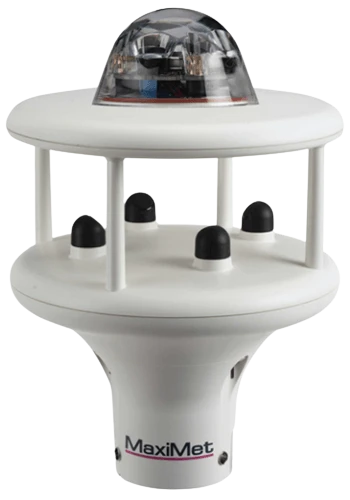
The MAX600 is an example of a compact weather station suitable for construction and environmental applications. It measures:

  • Wind speed
  • Wind direction
  • Temperature
  • Relative humidity

Ultrasonic wind sensors, such as those used in the MAX600, operate without moving parts. They transmit ultrasonic pulses between transducers and calculate wind speed and direction based on the time it takes for sound waves to travel between them. This provides:

  • Fast response
  • Low maintenance
  • Improved durability in harsh environments

Installation Best Practice

Once installed, the sensor should be:

  • Clear of nearby structures
  • Away from scaffolding
  • Not mounted directly against scaffold tubes
  • Positioned to avoid wind tunnel effects

Scaffolding in particular can significantly distort airflow. Tubes and platforms can create acceleration zones and turbulence, producing readings that reflect structural interference rather than true site wind.

Ideally, the monitor should be mounted:

  • Above roof level
  • With clear 360° exposure
  • Several metres above the roof surface
  • Away from roof edges

A dedicated rooftop mast or tripod is often preferable to mounting directly onto scaffold.

Final Thoughts

Perfect meteorological siting is rarely achievable on active construction sites. However, with good planning, sensible positioning and proper data interpretation, weather sensors remain a valuable and defensible tool for environmental and safety monitoring. The key is not perfection. It is understanding the limitations and designing the monitoring strategy accordingly.

Are All MCERTS dust monitors suitable for construction projects?

Air Quality & Dust

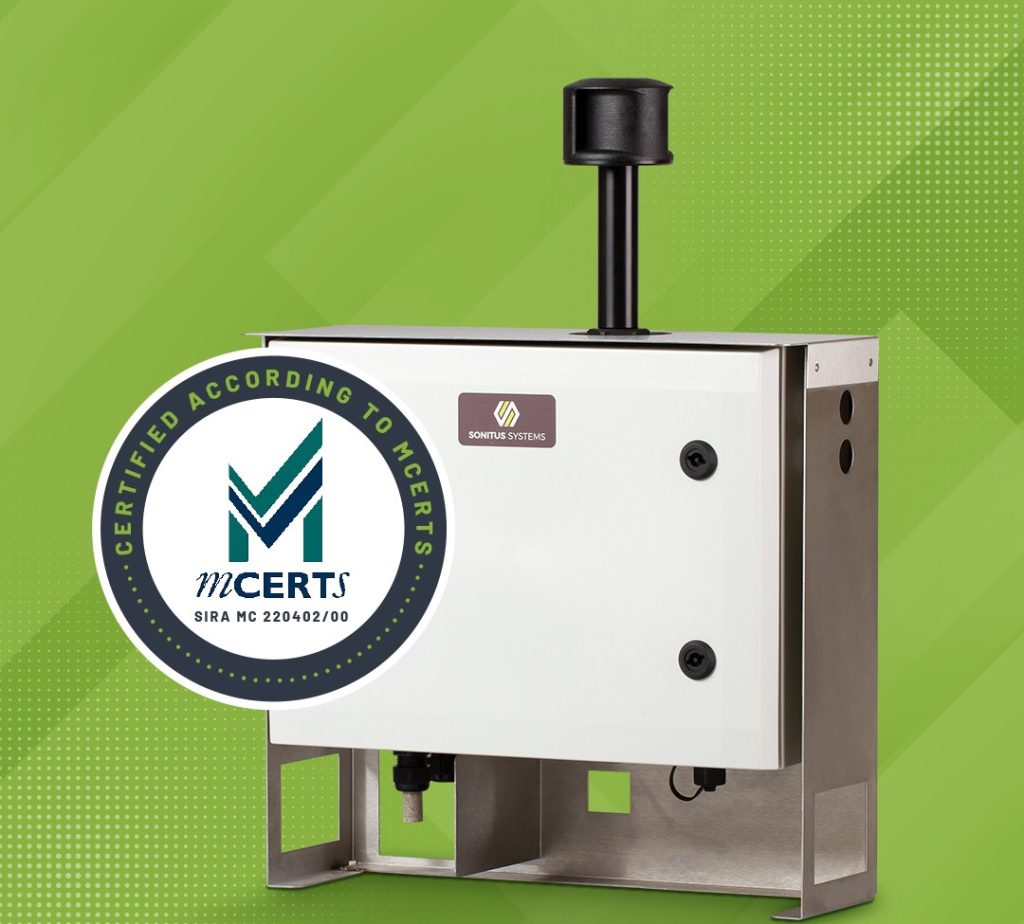
MCERTS-certified indicative dust monitors are widely specified for construction projects across the UK. However, are all MCERTS monitors truly suitable for construction applications?

The MCERTS indicative certification is primarily achieved through comparative measurements against reference-grade instruments in background (ambient) locations. To gain certification, a sample of instruments must demonstrate good long-term correlation with the reference method.

While this approach is appropriate for ambient community air quality monitoring, it does not necessarily mean a monitor is suitable for construction environments. There are several important differences to consider:

1. Averaging Periods

MCERTS indicative assessments are based on 24-hour average measurements. This works well for community air quality monitoring, where daily mean values are the primary concern.

Construction projects, however, typically operate over a working day of around 10 hours, with dust limits often defined over hourly or 15 minute periods. Monitoring systems therefore need to:

  • Measure accurately over short averaging periods
  • Identify dust events in real time
  • Trigger immediate alerts when limits are exceeded

A monitor optimised for 24-hour averages may not provide the responsiveness required on a live construction site.

2. Concentration Ranges

MCERTS comparative testing is conducted at ambient locations where particulate concentrations are relatively low – typically around 40 µg/m³.

Construction sites, by contrast, can generate significantly higher dust levels, often 150 µg/m³ or more. Dust monitors used on construction projects must therefore maintain accuracy across a much wider and higher concentration range than is typically encountered in ambient environments.

3. Measurement of PM₁₀

Although all MCERTS indicative dust monitors report PM₁₀, not all of them directly measure it.

Some instruments measure PM₂.₅ and apply a fixed conversion factor to estimate PM₁₀. In ambient environments, this can produce good correlation because PM₂.₅ and PM₁₀ levels often track closely together.

On construction sites, however, dust sources are very different. Coarser particles are more prevalent, and PM₁₀ does not necessarily follow PM₂.₅ in the same way. For construction applications, it is important that the optical sensor directly measures PM₁₀ rather than inferring it.

4. Heated Inlets

Many MCERTS indicative monitors are not fitted with heated inlets.

Heated inlets are used to dry the sample air and remove fog and mist droplets, which would otherwise be detected as particulate matter. In construction monitoring, particularly where reporting periods are short fog or mist can generate false dust events if the sample air is not properly conditioned.


Choosing the Right Monitor

MCERTS certification ensures environmental data is accurate and reliable, but certification alone does not guarantee suitability for every application.

When selecting a dust monitor for construction, it is essential to consider:

  • Short-term averaging capability
  • Performance at higher concentration ranges
  • True PM₁₀ measurement
  • Effective inlet conditioning

If you are unsure which type of dust monitor is most appropriate for your project, please contact the team at Campbell Associates for advice.


MCERTS is the Environment Agency certification scheme designed to ensure environmental monitoring equipment meets defined standards of accuracy and reliability.

Why monitoring dust at night is essential on construction sites in the UK

Air Quality & Dust

Construction activity may slow or stop overnight, but dust emissions do not simply switch off. In fact, certain night-time conditions can lead to elevated readings, making continuous monitoring just as important after dark as it is during the working day.

Understanding why this happens and how to manage it is key to protecting public health, maintaining compliance, and safeguarding a project’s reputation.

Why Dust Levels Can Rise at Night

1. Increased Wind Speeds in the Evening

It is not uncommon for wind speeds to increase after sunset. One important atmospheric phenomenon behind this is the nocturnal low level jet.

As the ground cools rapidly at night, the air close to the surface becomes stable and calm. This layer effectively decouples from stronger winds higher up. Without surface friction to slow them down, these higher altitude winds can accelerate and move closer to ground level.

When wind speed increases:

  • Dry dust piles are more easily disturbed
  • Exposed surfaces release fine particles
  • Previously deposited dust can be re suspended

Even if no active work is taking place, environmental conditions alone can drive emissions.

2. Drying of Surfaces

Evaporation can continue into the evening, particularly after a warm day. When combined with higher wind speeds, exposed materials dry out more quickly. Drier surfaces mean finer particles are more easily lifted into the air.

Without proper controls in place before leaving site, dust can become airborne overnight.

3. Early Morning Fog and Optical Monitors

In the early hours, fog events are common. Optical particle counters may detect water droplets because they are similar in size to dust particles. This can lead to elevated readings that do not represent true particulate pollution.

Water particles are inherently not a health risk in the same way as mineral dust, but they can affect data accuracy.

Modern monitoring technologies address this in two main ways:

  • Predictive algorithms that distinguish likely fog events
  • Heated inlets that dry incoming air, removing water droplets before measurement

By physically resolving the issue through air drying, readings more accurately reflect real dust concentrations.

Why Night Time Dust Still Matters

Airborne particles such as PM10 and smaller are hazardous to health. Fine particulate pollution contributes to respiratory and cardiovascular disease and is linked to over one hundred thousand early deaths each year in the United Kingdom.

Children and infants are particularly vulnerable.

The responsibility to control nuisance dust and protect health does not end when workers leave the site. Emissions continue to have an environmental impact throughout the night, affecting nearby residents and sensitive receptors.

Regulatory limits are often based on short averaging periods such as fifteen minutes or one hour. However, these limits do not negate the need for continuous oversight. A sustained moderate elevation overnight can still have environmental and reputational consequences.

Practical Controls Before Leaving Site

Effective dust management overnight starts with preparation. Site managers should ensure that appropriate controls are in place before work finishes for the day.

These include:

  • Covering dust piles
  • Wetting down exposed materials
  • Closing doors to contain internal areas
  • Installing barriers and hoarding to limit dispersion
  • Securing stockpiles against wind disturbance

Proactive management significantly reduces the risk of overnight exceedances.

The Value of Continuous Monitoring

Continuous dust monitoring provides visibility when the site is unattended. It allows managers to:

  • Identify patterns linked to wind speed and weather
  • Detect elevated night time concentrations
  • Assess the effectiveness of control measures
  • Plan improvements for future shifts

Systems such as the SiteSens and the DustSens DM30 from Campbell Associates enable reliable long term monitoring, including mitigation of fog related measurement issues through advanced technology.

Sonitus Systems SiteSens DustSens Site Engineer Weather Wind Tripod Environmental Outdoor

Where immediate night time alerts may not be practical, alternative strategies can be implemented. For example, lower thresholds can be applied over longer averaging periods to detect sustained elevated levels overnight. Alerts can then be delivered at the end of the monitoring window, allowing action to be taken the following morning.

Protecting Health, Environment and Reputation

Construction sites operate within communities. The duty of care to minimise nuisance and protect health continues twenty four hours a day.

Night time dust monitoring is not simply a regulatory exercise. It is a proactive approach to:

  • Safeguarding public health
  • Reducing environmental impact
  • Demonstrating responsible site management
  • Avoiding complaints and enforcement action

By combining robust controls with continuous monitoring and modern measurement technology, construction sites can ensure that dust is managed effectively at all hours.

Because dust does not stop when work does, neither should monitoring.

According to the World Health Organisation’s (WHO) Global Air Quality Guidelines:

Annual average for PM10: 15 micrograms per cubic metre (µg/m³)

24-hour average for PM10: 45 µg/m³

These are the guideline levels recommended to protect human health; they are not legally binding limits but serve as health-based benchmarks for air quality policy and planning.

The Institute of Air Quality Management (IAQM) guidance for construction and demolition sites does not prescribe fixed statutory UK air quality limit values for PM10 like those set for general ambient air (eg World Health Organisation or national objectives). Instead, it focuses on best practice dust risk assessment, monitoring and action trigger levels to manage dust emissions from sites.

Action trigger levels / monitoring guidance

For sites assessed as medium or high risk of dust impact, the IAQM’s monitoring guidance (2018 document Guidance on Air Quality Monitoring in the Vicinity of Demolition and Construction Sites) recommends real time PM10 monitoring with site-specific action levels or, where a generic level is used, a trigger level of 190 µg/m³ (one hour mean) to prompt investigation and corrective action. Monitoring should be proportional to the assessed risk and agreed with the local authority.

Read more about IAQM’s position on low cost dust sensors here.

Noise Nuisance Investigation

Environmental Health

Sound level meters are used in noise nuisance and domestic environments to assist with resolving complaints between neighbours. These instruments are deployed by housing officers within local authorities and housing associations to record and capture noise events as evidential material where a disturbance is alleged.

The systems are commonly referred to as noise nuisance recorders or noise monitoring kits. They are typically based on established sound level meter platforms such as the Norsonic Nor140 or Nor145 NNR kits and the Larson Davis 821 SoundExpert NNR kit, supplied exclusively in the United Kingdom by Campbell Associates. The abbreviation NNR has become widely adopted as a general term for this type of equipment.

Noise recordings are supported by event logs completed by the resident, which accompany each captured event. The devices log sound pressure levels in decibels to assess the impact and pattern of noise. As measurements are taken within the complainant’s property, background levels are often relatively low, meaning internal sounds may also be detected. For this reason, audio recordings are essential to assist with identifying the source of disturbance, such as dog barking, amplified music or raised voices.

With a plotted noise trace and synchronised audio recording, it is possible to visually examine changes in sound level over time and describe frequency characteristics. Low frequency content is often emphasised in frequency analysis displays when music is present, while impulsive sounds such as dog barking appear as sharp spikes in the level trace.

NNR Kit 821 SoundExpert

Modern instruments use sophisticated pre trigger technology to capture audio prior to the moment the resident presses the event trigger. This ensures that the build-up to the disturbance is recorded, even if there is a delay in activation. By the time the resident attends to the instrument and presses the trigger button, the relevant event has already been captured, thereby strengthening the evidential quality of the recording and improving reliability in reporting and investigation.

It is critical that equipment is not only technically advanced but also simple to operate. The Larson Davis 821 SoundExpert NNR kit has been developed to provide a cost-effective solution for an industry operating within tight budgets, where reliable performance is required without the expense typically associated with high specification acoustic systems.

Demand for monitoring equipment has increased since the COVID pandemic, largely due to more people working from home and becoming more aware of neighbouring noise in domestic settings.