Mastering Section 61: The ultimate guide to environmental monitoring and compliance

News

For construction and demolition firms in the UK, navigating the Control of Pollution Act 1974 is a critical component of project delivery. Specifically, securing a Section 61 consent is the gold standard for proactive site management. It not only protects your project from the risk of a Section 60 stop-work notice but also demonstrates your commitment to Best Practicable Means (BPM) in mitigating noise, vibration, and dust.

At Campbell Associates, we provide more than just equipment; we provide a full-spectrum partnership to guide you through the Section 61 application process, from baseline surveys to automated compliance reporting.

What is a Section 61 Application and Why is it Essential?

A Section 61 application is a formal request for prior consent from a Local Authority regarding the noise and vibration impact of your planned works. By securing this agreement before you break ground, you achieve:

  • Legal Protection: Compliance with a Section 61 agreement prevents the council from serving a Section 80 abatement notice or a Section 60 notice, which can impose strict working hours or halt production.
  • Community Trust: Providing a clear Dust Management Plan (DMP) and noise mitigation strategy reduces community complaints and enhances your brand reputation.
  • Operational Certainty: You establish agreed-upon threshold limits and working hours, allowing for accurate project scheduling and budgeting.

How Campbell Associates Supports Your Section 61 Journey

We help you meet the rigorous requirements of BS 5228 (Noise and Vibration Control on Construction and Open Sites) and IAQM (Institute of Air Quality Management) guidance through a three-stage approach:

1. Pre-Construction: Baseline Surveys and Prediction

Before work begins, you must establish the existing ambient levels of the area. We provide Class 1 Sound Level Meters and Vibration Monitors to conduct accurate baseline surveys.

  • Acoustic Prediction: We offer CadnaA noise prediction software to help you model the impact of your plant and machinery, a vital part of your Section 61 submission.

2. Construction Phase: Real-Time Monitoring & NVD Strategy

Once the project is live, our NVD (Noise, Vibration, and Dust) monitors provide the 24/7 data required to prove you are working within your agreed limits.

  • Noise Monitoring: Our NoiseSens and SiteSens systems offer remote access and audio triggers to identify the source of any noise breach.
  • Vibration Monitoring: Using the Syscom Rock we measure Peak Particle Velocity (PPV) to protect sensitive structures and satisfy BS 7385-2 requirements.
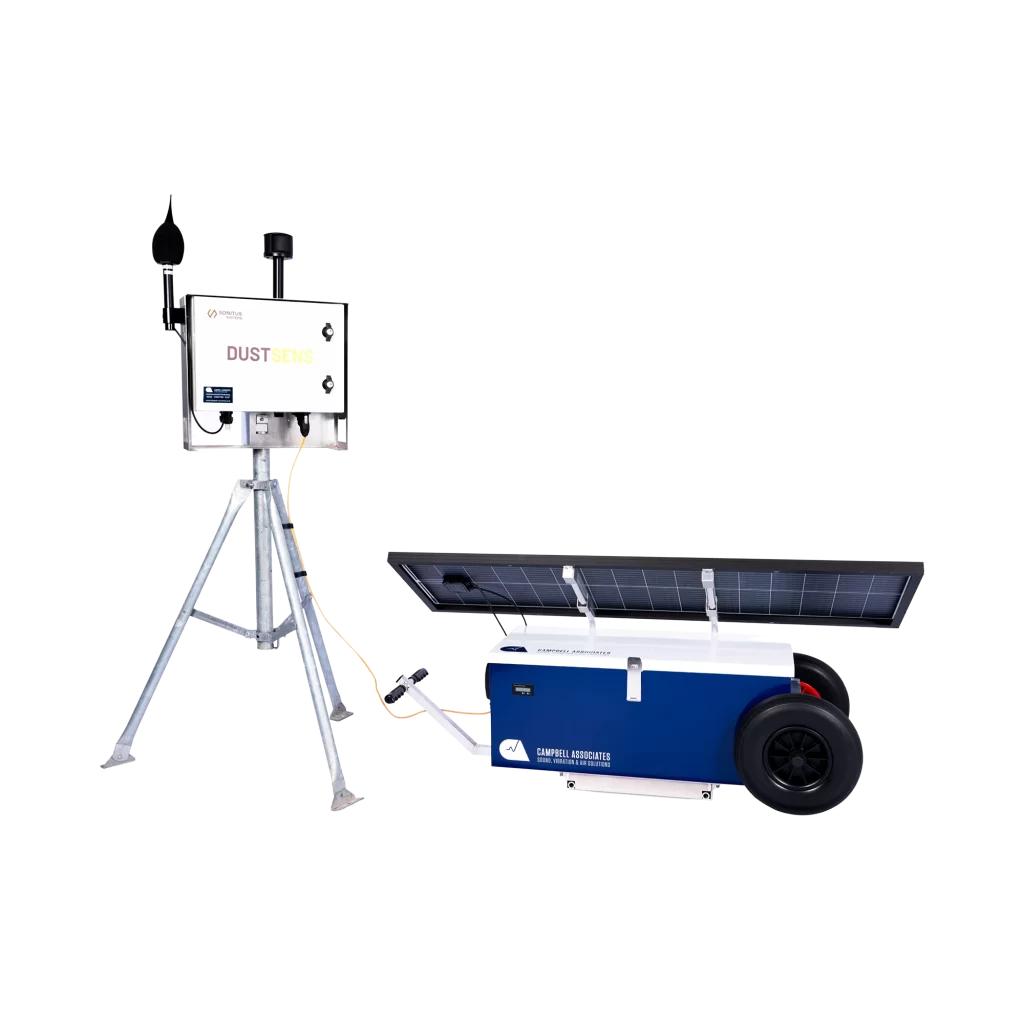
  • Dust Monitoring: Our DustSens systems are MCERTS certified, utilising heated inlets to ensure accurate PM10 and PM2.5 readings, even in the UK’s high humidity.

3. Compliance & Reporting: The Sonitus Cloud

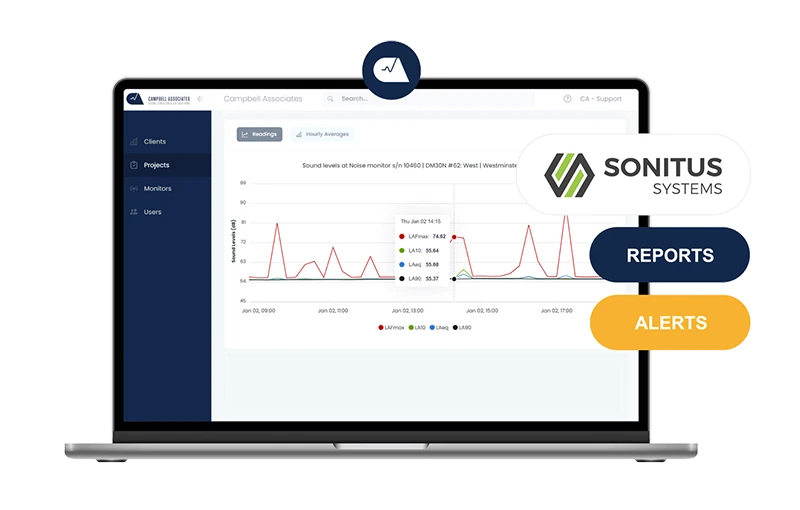
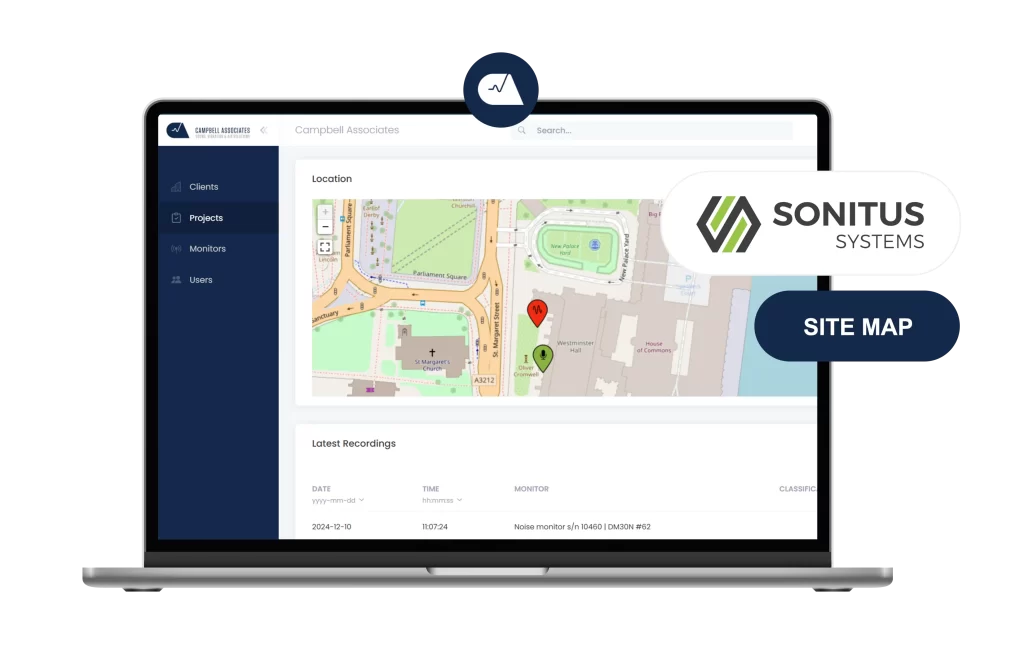
The key to a successful Section 61 is the audit trail. All Campbell Associates monitors feed data into the Sonitus Cloud, a centralised portal that:

  • Automates Reporting: Generate weekly or monthly compliance reports to send directly to Environmental Health Officers (EHOs).
  • Instant Alerts: Receive SMS and email notifications the moment a threshold is approached, allowing for immediate on-site mitigation.
Sonitus Cloud Map
Sonitus Cloud Map

Optimising Your Site with Integrated Environmental Monitoring

Monitoring TypePrimary Regulation/StandardEquipment Solution
NoiseCoPA 1974 / BS 5228-1SiteSens / NoiseSens
VibrationBS 5228-2 / BS 7385-2Syscom Rock / AvaTrace
Dust (Air Quality)Environment Act / IAQMDustSens (MCERTS)

Don’t Risk Your Project’s Timeline

A failed Section 61 submission or a single noise complaint can cost thousands in delays. By partnering with Campbell Associates, you ensure your site is equipped with the UK’s most reliable, MCERTS-certified and Class 1 monitoring technology.

Would you like our team to review your upcoming project requirements and recommend a bespoke monitoring package for your Section 61 application?

Why heated inlets are important for dust monitors on UK construction sites

Air Quality & Dust

The Importance of Dust Monitoring in the UK

Dust monitoring is a mandatory component of construction site management in the UK, governed primarily by the Control of Substances Hazardous to Health (COSHH) Regulations 2002 and the Environmental Protection Act 1990. Construction activities such as demolition, excavation, and cutting release significant amounts of airborne dust; including Respirable Crystalline Silica (RCS) and particulate matter like PM10 and PM2.5. These pose severe health risks and can trigger “statutory nuisance” claims under Section 79 of the Environmental Protection Act.

To maintain compliance with HSE Workplace Exposure Limits (WELs) and IAQM (Institute of Air Quality Management) guidance, real-time monitoring is essential. It allows site managers to protect worker health, satisfy local authority planning conditions (Section 106 agreements), and provide a robust data audit trail to defend against community complaints.

Humidity vs. Accuracy

In the unpredictable climate of the UK, the core issue for monitoring is humidity. Dust particles are often hygroscopic, meaning they attract water. In the UK, where relative humidity often exceeds 80%, this becomes a major technical hurdle for site managers.

What Is a Heated Inlet?

A heated inlet is a sample conditioning component fitted where outside air enters a dust monitor. It slightly warms the incoming air before it reaches the internal sensors or sampling chamber. While heating air in environmental instruments might seem counterintuitive, the benefits for dust monitoring are significant: it evaporates the water attached to the dust, ensuring you measure the dry mass of the particles rather than the water content.

Heated vs. Non-Heated Inlets

FeatureNon-Heated InletHeated Inlet (Smart Heated)
How it WorksPulls ambient air directly into the sensor.Warms the air (35–50°C) before it hits the sensor.
AccuracyProne to over-reading by up to 50% in damp conditions.Evaporates moisture so only the dry mass is measured.
Power NeedsVery low (often runs on small solar panels).Higher (requires mains or large battery arrays).
UK RegulationRarely meets MCERTS standards for official reporting.Often required for Section 106 or high-risk sites.
Best Use CaseShort-term, internal, or indicative low-budget checks.Perimeter monitoring for legal and planning scrutiny.

Why the UK Specifically Requires Heated Inlets

If your construction site is in a large city, or any coastal area, humidity is your biggest enemy. Using a non-heated inlet often leads to phantom dust spikes in your data that occur around 6:00 AM when the dew point is reached, but before any machinery has started.

  1. MCERTS Compliance: The Environment Agency’s MCERTS standard for UK dust monitoring often requires equivalence to the reference method. Non-heated monitors struggle to achieve this because they don’t manage moisture, making their data legally questionable, if you are trying to defend against a local council’s abatement notice.
  2. Avoiding Stop Work Orders: If your site uses automated alerts, a non-heated monitor might send a high dust text to the site manager during a rainy afternoon. If you stop work based on that data, you’re losing money for no reason. Conversely, if you don’t stop work, you have a record of a breach that didn’t actually happen.

The Rule of Thumb: If the data is being sent to a Local Authority or used for legal compliance in the UK, always go for a heated inlet.

The Campbell Associates Solution

The Campbell Associates range of environmental monitors including the AQS-1, DustSens, and SiteSens features advanced heated inlet technology as a standard. In the volatile UK climate, where high humidity and morning mist are common, these systems prevent the mistaking of water vapor for dust. By warming the incoming air to a constant temperature before it reaches the optical sensor, Campbell Associates’ systems ensure that the data used for MCERTS reporting and planning condition compliance is both accurate and legally defensible, preventing unnecessary project stoppages caused by phantom dust spikes.

Off-Grid Environmental Monitoring: Powering Compliance through Solar and Battery Innovation

Construction Resources

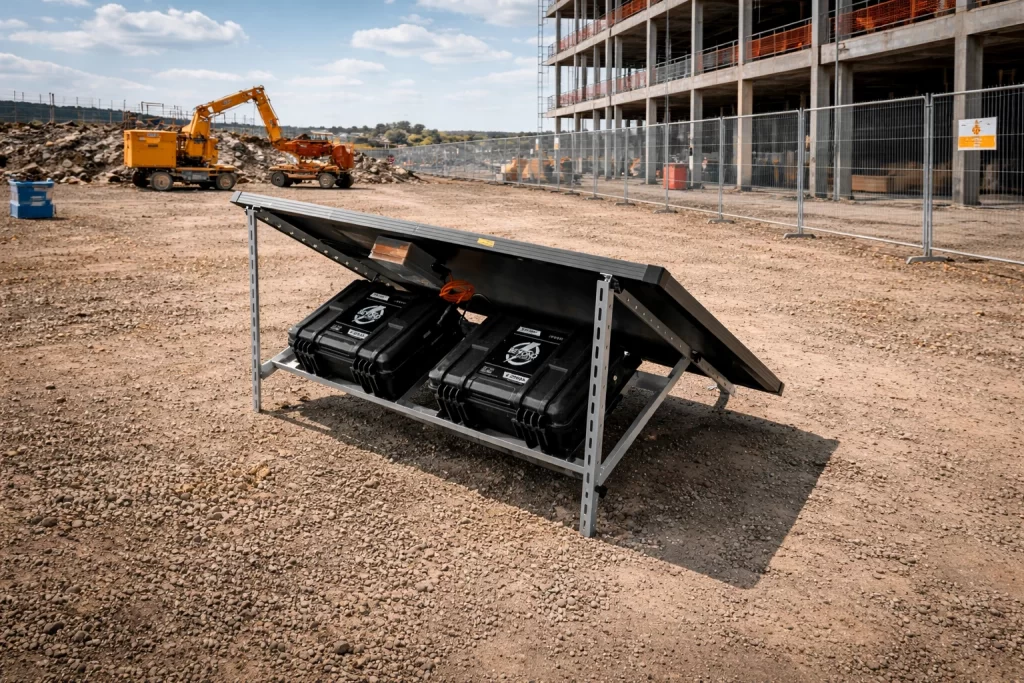
From meeting your sustainability and Net Zero targets to simply having no mains power, there are multiple reasons why UK construction and demolition sites require off-grid power. Off-grid renewable energy systems, specifically solar-plus-storage solutions offer a robust method for powering noise, vibration, and dust monitoring equipment. To maintain compliance with Section 61 requirements, sites must ensure an uninterrupted power supply to facilitate continuous, reliable environmental data collection.

Overcoming the UK Climate

While solar power is the gold standard for sustainability, the British weather is famously temperamental. For construction sites, intermittent power is not an option; a gap in data can lead to a breach of Section 61 consent and potential site shutdowns. At Campbell Associates, our philosophy is centred on Solar-Plus-Storage. By pairing high-efficiency panels with high-capacity, intelligent battery systems, we enable sites to bridge the gap between sunny spells and the inevitable grey weeks of a UK winter.

The OGRE PS300: High-Capacity Power for Demanding Sites

For projects requiring maximum autonomy, the OGRE PS300 (Off-Grid Renewable Energy) system stands as the powerhouse of our range. Engineered specifically to handle the higher energy demands of dust monitors and multi-unit setups, the PS300 features a high-output 300W solar array paired with a substantial 2kWh LiFePO4 battery. This combination provides a massive energy reserve, ensuring your monitoring remains live even during the darkest months. Housed in a rugged, powder-coated steel enclosure, the unit is built for the harshest site conditions. It also features our signature security-focused design: a detachable wheel and handle system that allows for easy deployment, which can then be removed to create a tamper-proof, static installation.

Intelligent Battery Technology

To meet rigorous site demands, our solutions, including the Solar Power Hub, are engineered specifically for the continuous, low-wattage draw of environmental monitors like the NoiseSens and VibrationSens units. Key features include:

  • LiFePO4 Technology: We utilise Lithium Iron Phosphate (LiFePO4) for its superior stability and longevity. These batteries thrive in fluctuating UK temperatures (from -20°C to +60°C) without losing efficiency.
  • Bi-Facial Solar Panels: To capture every drop of energy on overcast days, our bi-facial panels collect sunlight from both sides—including light reflected off the ground.
  • Smart Monitoring: Our systems include Bluetooth-enabled controllers, allowing site managers to monitor power levels in real-time via an app.

Seamless Compliance with the Sonitus Cloud

Power is only half the battle; the data is the prize. All our power solutions are designed to work hand-in-hand with our automated monitoring range. When powered by our off-grid systems, monitors report 24/7 to the Sonitus Cloud.

This ecosystem ensures that even on the most remote demolition site, you have a live view of your environmental impact. You get the data you need for compliance, the peace of mind that your equipment will not fail overnight, and the satisfaction of significantly reducing your site’s carbon footprint by removing the need for noisy, high-emission diesel generators.

Conclusion

Transitioning to off-grid solar and battery power is no longer just a green luxury, it is a logistical necessity for modern UK construction. By utilising Campbell Associates’ robust battery solutions, contractors can ensure that their commitment to the environment matches their commitment to project timelines and regulatory excellence.

UKAS calibration for SITMA members

News

In the competitive landscape of sound insulation testing and environmental noise measurement, the precision of your data is your most valuable asset. For members of the Sound Insulation Testing and Measurement Association (SITMA), this precision is non-negotiable. SITMA requires that all noise measurement equipment, including sound level meters, acoustic calibrators, and tapping machines, undergo regular UKAS calibration.

This mandate isn’t just about red tape; it’s a strategic move to ensure Approved Document E compliance and to maintain the highest levels of technical competence in the UK construction industry.

UKAS vs. Traceable Calibration

A common question among acoustic consultants is whether traceable calibration is sufficient. For SITMA members, the answer is a firm no. While traceable calibration offers a documented path to national standards, it often lacks the rigorous, independent auditing that defines an ISO 17025 accredited laboratory.

  • UKAS-Accredited Calibration: The laboratory itself is audited by the United Kingdom Accreditation Service (UKAS) to ensure that every measurement, environmental variable, and staff member meets stringent international standards.
  • Traceable/Verified Calibration: Often provided by manufacturers, this confirms a device is in spec but does not offer the same level of legal defensibility or independent verification of measurement uncertainty.

SITMA Policy PUS007 explicitly states that only UKAS (or ILAC equivalent) certificates are acceptable. This ensures that when a consultant uploads raw data to the SITMA Portal, the foundation of that data, the hardware is mathematically beyond reproach.

Technical Precision and Measurement Uncertainty

Acoustics is a science of the invisible, where tiny fluctuations in air pressure translate into significant data points. Sound level meter calibration at a UKAS lab involves testing the device across its entire frequency range and ensuring the Class 1 or Class 2 accuracy remains intact.

  1. Annual Calibrator Checks: SITMA requires acoustic calibrators to be serviced every year. Since the calibrator is the reference point for every field test, its accuracy is paramount.
  2. Biennial Meter Service: Sound level meters must be calibrated every two years to account for electronic drift and microphone sensitivity changes.
  3. Uncertainty Budgets: Only a UKAS lab provides a detailed uncertainty budget, allowing the consultant to understand the exact margin of error in their field measurements.

Driving Quality in Acoustic Consultancy

Ultimately, SITMA’s insistence on UKAS calibration for acoustic equipment raises the bar for the entire industry. It filters out low-cost operators who might use unverified gear, ensuring that clients receive accurate sound insulation testing that actually reflects the building’s performance. For the professional acoustic consultant, choosing an ISO 17025 lab is an investment in their reputation and a safeguard against the high costs of measurement error.

At Campbell Associates, we understand that for a UK acoustic consultant, your data is only as good as the calibration behind it. That’s why we’ve built our UKAS-accredited laboratory (0789) to be the ultimate one-stop shop for your equipment. Whether you’re sending in sound level meters, calibrators, or vibration monitors, our highly experienced team of engineers brings decades of technical expertise to every piece of kit that crosses our bench. We don’t just process equipment; we ensure it’s performing at its absolute peak, giving you total confidence in your measurements.

To make your workflow even smoother, we provide a dedicated online calibration portal that gives you 24/7 access to your entire calibration history. You can instantly view, download, or share your certificates whenever you need them, eliminating the last-minute stress of hunting for paperwork before a site visit or a deadline. By combining rigorous engineering excellence with modern digital convenience, we ensure your instrumentation is always compliant and your business stays moving.

Our SITMA specific building acoustics package addresses your requirements, encompassing UKAS calibration, a onetime precision measurement of a tapping machine, and the evaluation of directivity and stability for measurement speakers.

Workplace Hand-arm(HAV) & whole-body (WBV) vibration testing

Vibration

Hand‑arm and whole‑body vibration testing is essential for protecting workers who use power tools, heavy machinery, or vibrating equipment in the workplace. Prolonged exposure can lead to conditions such as hand‑arm vibration syndrome, reduced grip strength, numbness, and discomfort affecting the back or shoulders. Understanding real vibration levels is a key part of workplace safety and helps organisations manage vibration risks effectively.

Vibration levels change depending on the tool, the material being worked on, and the way the job is carried out. For this reason, the HSE encourages employers to measure vibration in real‑world conditions instead of relying solely on manufacturer‑suggested levels.

Real‑world vibration measurement provides far more accurate results than manufacturer data, which is usually recorded under controlled test conditions and rarely reflects everyday workplace use. By following guidance from the HSE, meeting the requirements of the Control of Vibration at Work Regulations 2005, and applying recognised standards such as BS EN ISO 5349‑1 and BS EN ISO 5349‑2, onsite testing shows how tools perform in everyday use and how vibration is transferred to workers during normal activities.

Modern vibration meters, including the Larson Davis HVM200, allow employers to measure vibration precisely at the point where it enters the body during normal workplace activities. By analysing real‑world data, organisations can identify high‑vibration tools, plan work more effectively, and take practical steps to reduce long‑term health risks. This measured approach supports compliance, protects employee well‑being, and strengthens overall workplace safety.

Background Noise and Audiometric Investigations – Acoustic Calibration

Noise

Are you Measuring Background or your Sound Level Meters Noise Floor?

Audiometric testing requires environments with very low background noise to avoid two major problems:

  1. Patient distraction, and
  2. Masking or corrupting the test signals.

Because human perception of sound is strongly contextual and subjective, clinicians cannot reliably judge an environment’s suitability without objective sound level measurements.

The strictest requirements are for measurements down to 0 dB HL with open ears, whereas screening with enclosed headsets at thresholds above – 30 dB HL allows much more background noise. It’s prudent, however, to start by examining the most demanding case.


Sound Level Meter Requirements and Self-Generated Noise

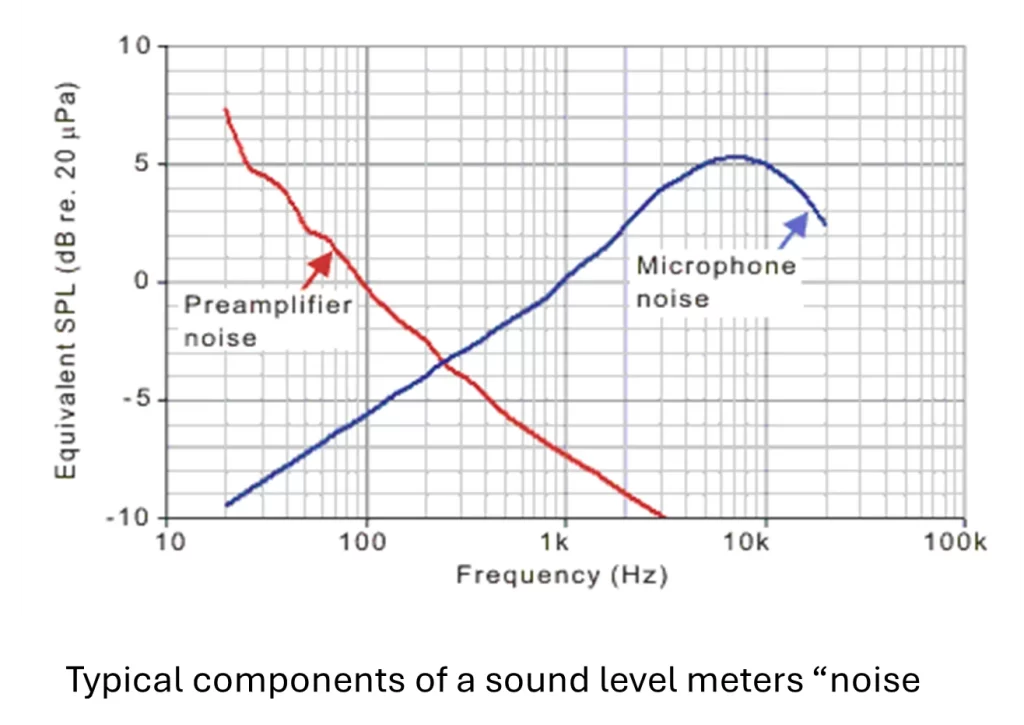
Every sound level meter has a self-generated noise floor that limits the lowest measurable level. It comes from:

  • Electrical noise (thermal noise in electronics), typically at low frequencies.
  • Acoustic noise (Brownian motion acting on the microphone diaphragm), dominating higher frequencies.

Since noise adds energetically, the error becomes:

  • Negligible if background noise is >20 dB above the noise floor
  • +0.4 dB error when the difference is 10 dB
  • +3 dB error when the background is equal to the noise floor

Thus, the meter’s noise floor should be at least 10 dB below the lowest background noise level you need to verify.


Calibration and Interpretation

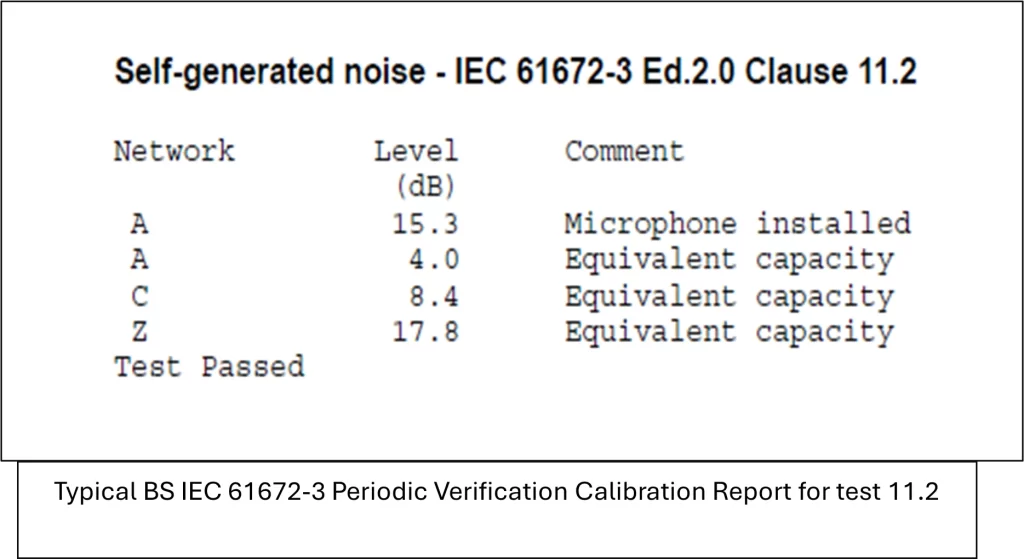
Accredited calibration reports normally show two self-noise measurements:

1. Complete instrument with microphone attached (dB(A))

This includes both electromagnetic and acoustic self-noise plus unknown residual noise in the “quiet” calibration room.

2. Electrical self-noise using a dummy microphone

Reported for A-, C-, and Z-weightings, allowing assessment of frequency-dependent behaviour.
Typically:

  • A-weighted noise is lowest, because A-weighting attenuates low frequencies
  • Z or C-weighted values are higher, because electrical noise is mainly low-frequency

Calibration standards do not impose pass/fail criteria for self-noise; they only require reporting. Meters naturally get noisier with age and environmental stress. The technician must therefore:

  • Know the instrument’s noise floor
  • Understand that the calibration figure includes ambient noise from the test room
  • Recognise that the real noise floor may be higher than the reported one

Audiology-Specific Requirements: Third-Octave Bands

Standard calibration reports use broadband frequency weightings, but audiology requires third-octave band criteria, as specified in:

  • BS 8253-2:2009, and
  • BSA Guidance

Therefore:

  • A third-octave band SLM is essential, and
  • Self-generated noise values must also be given per third-octave band and calibrated to verify compliance.

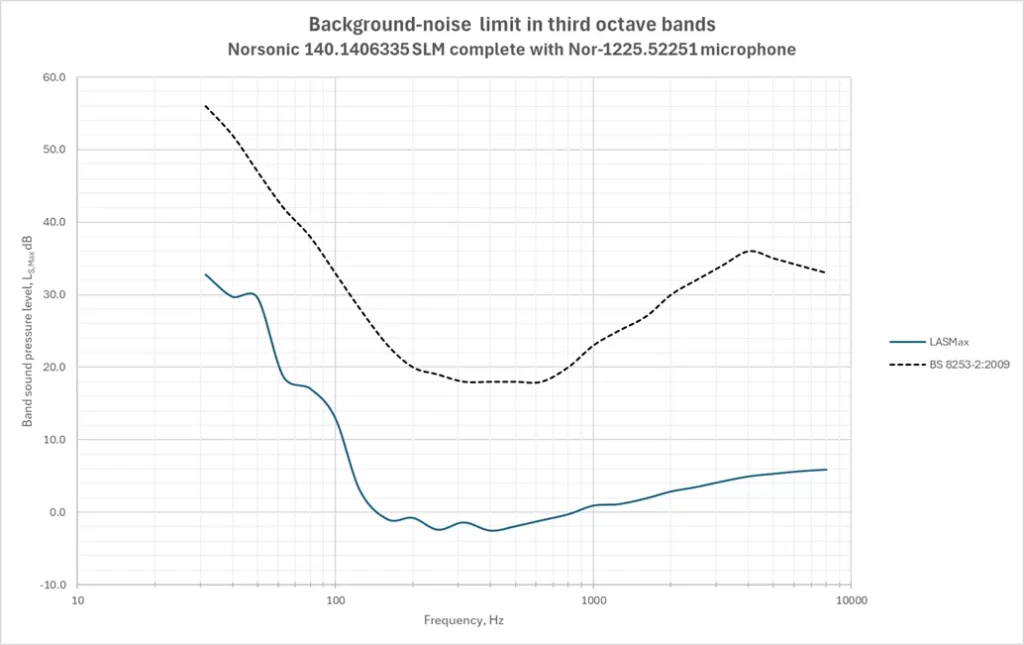
Enhanced calibration services can measure and report the SLM’s true third-octave noise floor, enabling direct comparison with audiometric room criteria. Typical results shown below:

Recommended background noise level for 0 dB HL audiometry and the verified LASmax of a reference class 1 sound level meter showing the -10 dB signal to noise can easily be obtained.

Campbell Associates supply sound level meters and audiometer calibration hardware, software and have an independent UKAS accredited calibration laboratory (0789) for acoustic and audiometer test equipment.

IAQM PM10​ Sensor Position: Are Low-Cost Sensors (LCS) Fit for Construction Site Monitoring?

Air Quality & Dust

The world of air quality monitoring has been revolutionised by the rise of Low-Cost Sensor (LCS) systems. These devices offer the promise of wider spatial coverage and real-time data, but for professionals in the construction and demolition sectors, a critical question remains: are these sensors fit-for-purpose for regulatory compliance?

The Institute of Air Quality Management (IAQM), recognising the concerns among its members, has published a new Position Statement on the use of LCS for PM10​ (Particulate Matter up to 10 micrometres in size) monitoring near construction sites.

Exert from version 1.0 IAQM Paper:

The Issue: With the increasing availability and use of low-cost sensor (LCS) particulate matter (PM) monitoring systems (also known as indicative sensor systems), IAQM members have raised concerns about whether these systems are fit-for-purpose, and compatible with the aims of IAQM Guidance(i) and the Code of Practice(ii), when used to monitor PM10 concentrations around construction sites, particularly during elevated PM events. This position statement only relates to PM10. The recent MCERTS updates and this guidance do not currently apply to PM2.5 measurements. The indicative nature of LCS systems means they are not currently fit-for-purpose for reporting against air quality objectives, limit values or PM2.5 targets.

Read the paper here.

Mastering Your Section 61: How Our Environmental Monitors Simplify the Process

News

As a site manager or project coordinator, you’re constantly juggling a dozen different things at once. The last thing you need is a complex legal application holding up your project. That’s where the Section 61 application comes in—a crucial but often time-consuming step for managing construction noise on site.

At Campbell Associates, we understand the pressure you’re under. We’ve designed our environmental noise monitoring systems and the Sonitus Cloud noise monitoring platform to take the headache out of Section 61 noise management, helping you secure approval faster and work with confidence.

What Exactly is a Section 61?

Simply put, a Section 61 application is a formal request for prior consent to carry out noisy works under the Control of Pollution Act 1974. You submit this to your local authority, detailing your planned work, noise predictions, and mitigation measures. Getting it right is key to avoiding noise-related complaints, costly fines, and project delays.

But how do you prove your predictions and demonstrate you’re meeting your commitments? That’s where we come in.

From Paperwork to Peace of Mind: A Step-by-Step Guide

Our environmental monitors aren’t just for checking compliance after a complaint; they are powerful tools that simplify your entire Section 61 process.

Step 1: The Pre-Application Phase – Building Your Case A strong Section 61 application starts with solid data. Before you even submit your paperwork, our monitors can be deployed on site to:

  • Baseline Monitoring: Accurately measure existing noise levels. This provides a clear starting point and helps you make realistic noise predictions for your application.
  • Predictive Data: Use our noise, vibration, and dust data to precisely model the potential impact of your planned activities on the surrounding area. This robust information makes your application more credible and professional.

Step 2: The Application – The Numbers that Count Once you have your baseline data, you can fill out the Section 61 form with confidence. Instead of using rough estimates, you’ll have a report generated from our monitors, demonstrating a proactive approach to environmental management. This can significantly speed up the approval process, as it shows the local authority that you have a plan rooted in accurate, real-time information.

Step 3: Post-Approval – Working Confidently Your Section 61 application is approved, and work can begin. Now, our monitors shift from a planning tool to a real-time safety net.

  • Continuous Monitoring: Our monitors run 24/7, tracking noise and vibration levels against the agreed-upon limits in your Section 61.
  • Real-Time Alerts: If a limit is approached or exceeded, our system automatically sends you an immediate alert via email or text message. This lets you react instantly, before a complaint is made.
  • Automated Reporting: Our Sonitus Cloud platform automatically generates clear, concise reports on your project’s compliance. When the local authority asks for an update, you don’t need to manually pull data. With a single click, you have a professional report ready to send, saving you hours of admin time.

Why Choose Campbell Associates?

  • Accuracy & Reliability: Our environmental monitoring equipment delivers accurate, dependable data, giving you confidence in your Section 61 noise monitoring submissions.
  • Simple to Use: Designed for busy site teams, our systems offer straightforward setup and an intuitive platform.
  • Remote Management: The Sonitus Cloud platform provides full visibility and control from your laptop or phone, reducing the need for constant on-site presence.
  • Peace of Mind: We help transform your Section 61 application from a potential roadblock into a smooth, efficient and defensible process.

Don’t let noise monitoring slow down your next project. Let our environmental monitoring solutions and the Sonitus Cloud platform give you the data, alerts, and confidence you need to manage Section 61 compliance effectively.

Contact Campbell Associates today to learn more about our solutions for your next Section 61 application.

Syscom Rock vibration monitor put through its paces

Construction Resources

Syscom Blog Image

At Campbell Associates, we are committed to providing the UK’s construction, demolition & acoustic industries with the most advanced and reliable environmental monitoring solutions. That’s why we were thrilled to showcase the power of our new Syscom Rock Vibration Monitor at the recent Institute of Acoustics meeting on “Measurement, Prediction and Assessment of Ground Borne Vibration.”

We seized the opportunity to put the Syscom Rock through its paces in a live, practical demonstration, highlighting its exceptional capabilities in real-world scenarios.

Putting the Rock to Work: A Live Demonstration

The practical session involved meticulously testing the vibration emitted by Geomatrix Ltd’s innovative system – a device renowned for assessing ground stiffness by emitting a precise sweep of frequencies (5Hz to 300Hz). This is crucial for understanding how vibration propagates, especially in complex urban areas where drilling, piling, and demolition are needed near sensitive structures.

Our new Syscom Rock monitor was strategically placed just 10 meters from the vibration source, alongside other leading systems, to meticulously measure ground-borne vibration across multiple cycles.

Real-Time Data, Real-World Insights with Sonitus Cloud

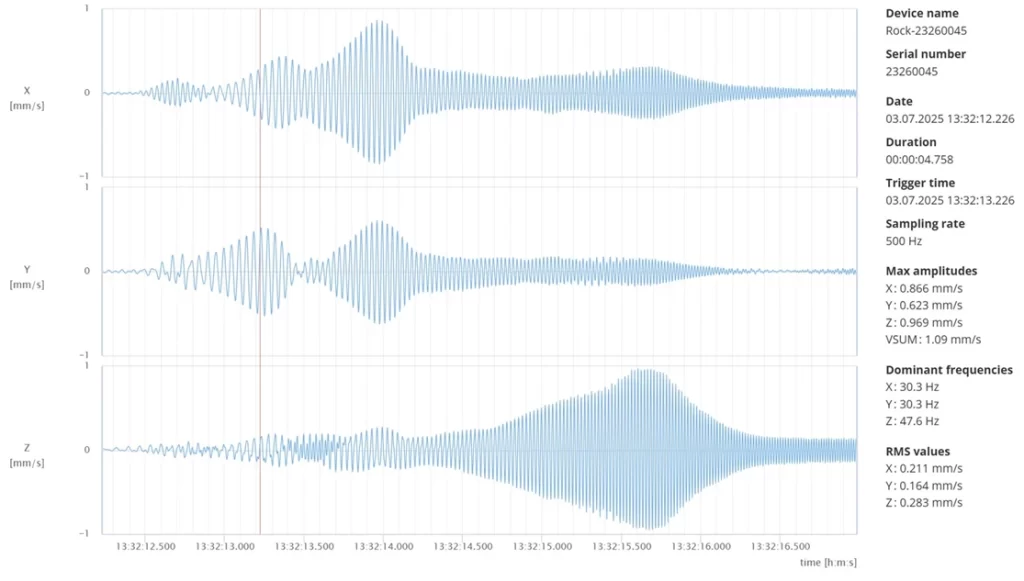
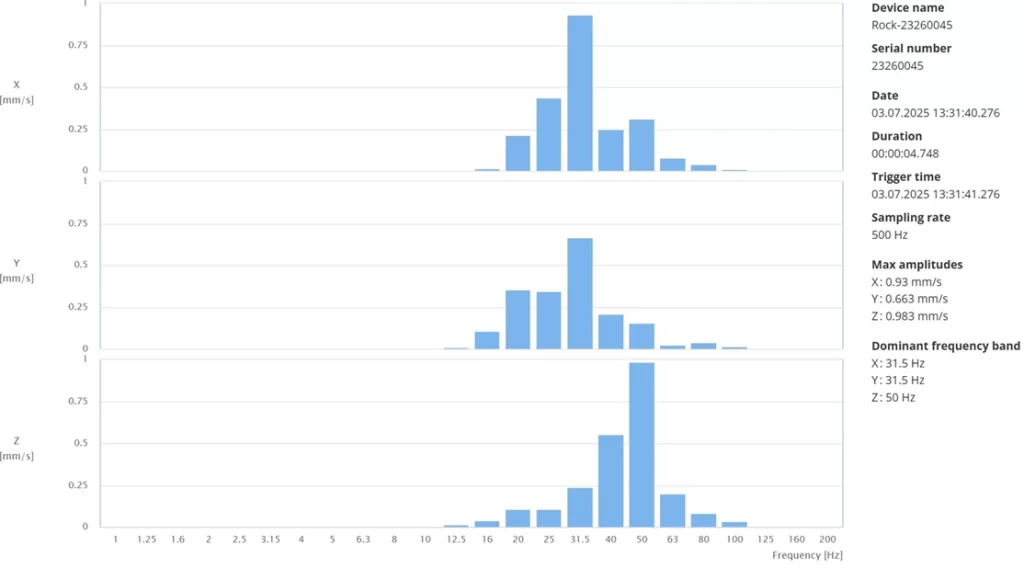
One of the Syscom Rock’s standout features is its seamless integration with the Syscom Cloud platform. As vibrations were generated, data was transferred in real-time, allowing us to immediately visualise critical insights. We demonstrated how background vibration levels were instantly displayed in X, Y, and Z directions, with clear indications of peak levels as the vibration source was activated and then scaled down.

The detailed signal files instantly revealed nuanced behaviours, such as the X and Y directions peaking earlier at a 30Hz frequency, indicating an observed decoupling effect of the machine. The Z direction, by contrast, peaked at 50Hz. This level of precise, real-time data empowers our clients to truly understand vibration propagation and make informed, proactive decisions on site.

Engineered for Efficiency: Solar Power & Single-Button Simplicity

Decision-makers in construction and demolition demand reliability and ease of use. The Syscom Rock delivers:

  • Exceptional Power Efficiency: Powered by a compact, integrated solar panel, the Rock ensures continuous monitoring with minimal power consumption, even in remote locations.
  • Effortless Setup: Its intuitive design means simple, single-button operation to initiate measurements, getting you up and running quickly with minimal training.

Secure Your Site’s Future with the Syscom Rock.

The Syscom Rock Vibration Monitor is more than just a device; it’s your solution for robust compliance, enhanced safety, and unparalleled insight into ground-borne vibration. Available or purchase and hire within the UK.

Invisible threats: understanding PM2.5 and PM10 in your indoor air

Air Quality & Dust

What is an airborne partiuclate?

An airborne particulate, also known as particulate matter (PM), is a microscopic solid or liquid particle that remains suspended in the air. These particles are incredibly diverse in size, shape, and chemical composition, originating from both natural sources like dust and pollen, and human activities such as combustion and industrial processes. Categorized by their aerodynamic diameter, particularly as PM10 (coarse particles) and PM2.5 (fine particles), these tiny airborne components can persist in the atmosphere for varying durations depending on their size, and their presence is a key factor in air quality assessments due to their potential impacts on human health and the environment.

What is the legislation for England?

The HSE have set exposure standards to comply with the requirements of The Control of Substances Hazardous to Health (COSHH) Regulations. These are described in the HSE document EH40, which is updated annually. Currently, these are:

  • 10,000 ug/m3 (8 hour time weighted average) for total inhalable dust.
  • 4,000 ug/m3 (8 hour time weighted average) for respirable dust.

Total inhalable dust is defined as the fraction of airborne dust which enters the nose and mouth during breathing and is therefore available for deposition in the respiratory tract. Respirable dust approximates to the proportion which penetrates to the alveoli within the lung.

European emissions standards have highlighted a yearly average of 40 μg/m³ and 25 μg/m³ for PM10 and PM2.5 respectively. The ‘WHO’ standards outline a guideline of 20 μg/m³ and 10 μg/m³ for PM10 and PM2.5 respectively.

Can they be monitored?

Yes! Absolutely. Our monitors provide reliable, high-quality data on particulate concentrations, enabling local authorities, construction sites, and environmental consultants to effectively assess air quality, identify pollution sources, and demonstrate compliance with the stringent standards set to protect public health across the United Kingdom.