Construction Resources Archives | Page 2 of 3 | Campbell Associates

Where to fit indicative noise, vibration & dust monitoring on construction sites

Construction Resources

Noise, vibration & dust monitors are typically installed at the edge of the site boundary, nearest or at sensitive receptors of those likely to be affected by the work. For example, sensitive receptors can include anything from local services such as; power, gas & water mains, underground services, public, residential or commercial buildings, and even road and rail.

When commissioning monitors on-site, special attention should be made to the local conditions and the best practical mean (BPM) should apply. Real-time monitors should be commissioned according to any standards set out by the local authority, client or third parties. Should there be an absence of this information, it is typical to refer to ‘code of practice for noise & vibration control on construction and open sites – BS5228’. For guidance on dust and air quality, it is typically common to refer to World Health Organisation limits, but further guidance is typically resourced from IAQM for construction and demolition sites.

These available resources give clear instructions to site managers and engineers on where and how best to install equipment on site. For example, the microphone from a noise monitor should be mounted in a free field (at least one metre away from any reflective façade or barrier) and mounted at a height of approximately 1.2 to 1.5 metres above ground level. When mounting the microphone to hoarding the microphone should be mounted above the hoarding or a correction applied.

The positioning of dust monitor samplers inlet should be located in a clear, unobstructed position, and some metres away from any large structures (such as walls of buildings and welfare cabins) that might interrupt airflow. Above the inlet, it should be open to the sky with no overhanging trees or other structures. The air inlet should be ideally mounted between 1.5 to 4m above ground level.

Where monitoring concentrations of PM10, sensors may be located upwind and downwind of the site, but in complex urban areas, this may be difficult to determine, therefore additional monitoring points may be required. On low-risk sites, one monitor could suffice, but it is typical to have one dust and noise monitor on each boundary of the site for directivity of the pollution.

Vibration monitors can be fixed in various ways depending on the application, and selecting the appropriate sensor is important. The measurement sensor must be fitted appropriately according to the required works, standards and guidelines and therefore more measurement points may be required. The sensor of the vibration monitor should be fit to a solid surface, such as a floor, wall or heavy metal floor plate and mounted inset distances horizontal or vertically dependent on the measurement interest. For further advice on commissioning a noise, vibration or dust monitor, please get in touch with one of your local technical sales engineers.

Why you should be monitoring no2 on construction & demolition sites

Air Quality & Dust

CONSTRUCTION SITES AND NO2

It is well known that construction sites can generate and emit many different forms of pollution,

the most obvious being material waste, visible dust, noise and vibration. However, construction and demolition sites also produce less obvious pollutants which are of serious concern for human health and impact on the environment. Two of these pollutants are the gas nitrogen dioxide (NO2) and fine dust particles called particulate matter. (PM) It is estimated that in London, NRMM (Non-

Road Mobile Machinery) contributes to 7% of NOx, 14% of PM2.5 and 8% of PM10 and it is believed to be a similar situation in other major conurbations.

NRMM on construction sites generate NO2 from diesel or gasoline fuelled engines in trucks, excavators, loaders, bulldozers, mobile cranes, off-road machinery and static engines such as pumps and electricity generators. Idling engines are a significant contributor to NRMM emissions and personal exposure to PM2.5, PM10 and NO2. It is estimated that 15% of diesel fuel consumed per year in the UK is associated with NRMM, which equates to approximately 4 billion litres.

HOW IS NO2 GENERATED?

Combustion of fossil fuels produces oxides of nitrogen (NO2). NOx is primarily made up of nitric oxide (NO) and nitrogen dioxide (NO2). NO2 is of most concern due to its impact of health. However, NO easily converts to NO2 in the air – so to reduce concentration of NO2 it is essential to control emissions of NOx. National ambient air quality standards set NO2 as a criteria pollutant and indicator of the larger group of nitrogen oxides.

HEALTH EFFECT OF NO2

Scientific evident links short-term NO2 exposures with adverse respiratory effects including airway

inflammation in healthy people and increased respiratory symptoms in people with asthma. Studies also show a connection between short-term exposure and increased hospital admissions for respiratory illnesses. In addition to contributing to ground-level ozone effects on the respiratory system, NOx reacts with ammonia, moisture and other compounds to form small particles. These small particles can penetrate deeply into sensitives parts of the lungs. Recent research shows children exposed to diesel-dominated air pollution in London are showing poor lung capacity, putting them at risk of lifelong breathing disorders. The study was led by Kings College London, Queen Mary University of London and the University of Edinburgh.

WHAT IS NEW IN NO2 MEASUREMENT?

Aeroqual provide real-time dust sentry monitors for accurate measurement of dust and particulates, (PM) which are widely used across the UK on construction sites. These monitors now have the option of being upgraded to accurately measure NO2 in parallel with dust and particulates. The systems have advanced patented sensors and an active pumped air flow to sample NO2 to near reference standards giving a reliable picture of key pollutants on site. Data is stored and uploaded to a cloud each minute of alerting and reporting. In the past diffusion tubes have been used to measure NO2 concentrations in communities. These are passive devices which measure the average concentration typically over 1 month. NO2 concentrations are usually required as an hourly period, and for construction projects during working hours. These limitations of diffusion tubes make new real time NO2 monitoring an attractive proposition. Newer dust sentry and profiler monitors can be upgraded now and brand new AQS (Dust & Gas units) can be purchased or hired today.

The dust Sentry AQS can also measure Ozone and VOC’s. For more information on air quality monitoring click here.

How to avoid a vibration breach fine #tricksofthetrade

Construction Resources

Understanding vibration levels and limits accurately is critical. So ensuring the device measuring the vibration is installed correctly is paramount. Our favourite device for measuring vibration in terms of protecting buildings and structures is the AVA-M80 vibration monitor with a tri-axial geophone. This unit will measure the Peak Particle Velocity in 3 directions and provide real-time email and SMS alerts as well as having a long term 8-month battery life.

Vibration limits are mentioned in BS5228-2 for construction and demolition works on open sites. Below are a few steps that should be taken when measuring according to the standard and guideline, in terms of the limits only. These points are general observations of the standard, and you should employee a qualified engineer to make an assessment on project and practice before commencing any works as these notes do not cover all important considerations when measuring vibration.

Step 1.

Identify who or what we are protecting. In BS5228-2, there are two tables with defined limits, one for human perception and one for structural damage. Let’s focus on structural damage only.

Step 2.

Identify the type of building. What are the limits? They are noted in Table B2.

Step 3.

Take note of the frequency range and limits accordingly. Notice how the vibration limits increases with frequency, but generally a lower limit for all is normal used, assuming the vibration sensor is setup to the correctly filter profile and standard. If we know the frequency and the level, potentially we can avoid a breach which is why the AVA-M80 monitor can collect this dataset with vibration waveform data.

In the table you will see at 4Hz the vibration limit is 15mm/s for cosmetic damage right up to 50mm/s at 40Hz.

Note that Figure B.1 refers to cosmetic damage! What is cosmetic damage?

  • Cosmetic damage is usually considered as the formation of hairline cracks on drywall surfaces, or the growth of existing cracks in plaster or drywall surfaces; in addition, the formation of hairline cracks in mortar joints of brick/concrete block construction.

In the standard it also documents other types of damage such as:

  • Minor damage is considered the formation of large cracks or loosening and falling of plaster or drywall surfaces, or cracks through bricks/concrete blocks.
  • Major Damage to structural elements of the building, cracks in support columns, loosening of joints, splaying of masonry cracks, etc.

So, what are the limits for Minor and Major damage? Well as the standard mentions.

What is environmental monitoring?

Construction Resources

The term environmental monitoring is used broadly across several different industries and therefore means something different to everyone. When we (Campbell Associates) use the term environmental monitoring, we are referring to the process of monitoring the emissions of noise, vibration, and dust, most commonly on construction and demolition sites.

Most local authorities in the UK require significant construction and demolition projects to monitor and minimise their environmental impact. Commonly known as a section 61, construction or demolition firms may apply to the local authority for consent to carry out works, which are likely to have a significant impact on the neighbourhood due to its generation of noise and vibration.

A section 61 application outlines the works which are planned to take place, the working hours of the site and a plan to mitigate potential noise and vibration impact by best practical means. By mitigating the risk of complaints by monitoring emissions, projects can run smoothly and effectively with minimal effort.

THE BENEFITS OF A SECTION 61 APPLICATION

  • Reduced environmental impact
  • Consideration plans in place to help protect the community and reduce the number of complaints
  • Can protect you from further legal action Section 61 can be used in an appeal against a noise abatement notice
  • Evidence that the developer has considered the environment and has set out to reduce environmental impact by best means practical
  • Reduced risk for your site to be penalised
  • Cannot be served a section 60 noise abatement notice

Campbell Associates offer a fantastic range of automated noise, vibration, and dust monitors that all report to a Cloud; our online reporting platform allows you to access data 24/7 on any device to ensure you are running your project in accordance with your section 61 agreement.

The Sonitus Cloud allows you to view your data the way you want to with multiple viewing options. The calendar gives you a clear picture of your compliance history; allowing you to view levels on a daily and monthly basis. The Project view allows you to see all monitors at any given project, so if you have more than one project it is easy to check compliance and breaches. Automated reporting feature lets you schedule when to receive either weekly or monthly reports directly to your inbox. The report includes limit breaches, daily averages, and peak values of your monitors.

Complying with local regulations for environmental monitoring is easy and simple to manage. With hassle-free, straight forward monitors you can can keep in control of your project.

Why you should be monitoring NO2 on construction and demolition sites

Air Quality & Dust

Construction sites can generate many types of pollution. If you asked somebody to describe what they thought were the most common types of waste, they would point to things like noise, vibration, and dust pollution.

However, one of the most common problems people experience on demolition and construction sites is the presence of nitrogen dioxide and fine dust particles, known to many as particulate matter.

With roughly 7% of all NO2 production in London generated by Non-Road Mobile Machinery (NRMM), it’s never been more important to engage in proper dust monitoring and keeping an eye on MO2 levels.

How do construction sites make NO2?

So, the burning of fossil fuels creates oxides of nitrogen. This is what we call NO2, but what we’re actually interested in is NOx. This is a combination of nitric oxide and nitrogen dioxide. NO2 is primarily the concerning element due to the health impact that it has.

However, nitric oxide can convert to NO2 in the air, so if we’re going to manage the concentrations of NO2 properly, we need to control NOx emissions!

What are the health effects of NO2?

So, it is important to recognise that there are short-term consequences of NO2 and long-term consequences. Short-term impacts can include airway inflammation in healthy people and increased respiratory distress in asthmatics.

Studies have also shown that there is a connection between short-term exposure to NO2 and increased admission to hospitals for respiratory illness.

Furthermore, NOx can mix with ammonia, moisture and other compounds in the air to form smaller particles that can easily enter the sensitive parts of the body.

Recent research conducted on the subject shows that children who were exposed to air pollution in London had a poor lung capacity and were at risk of developing lifelong breathing problems.

Thoughts on NO2 measurement

Dust monitoring is a good way of gauging how much NO2 is present in the air.

There are special devices which have an actively pumped airflow which allows them to sample NO2 in the atmosphere to get a proper understanding of how many key pollutants exist on the site.

The data is then stored and uploaded to the cloud, which can be accessed by anybody.

There are also passive systems to consider that collect and store information over the course of a month.

We usually measure NO2 concentrations as something over an hour period, and we use it frequently for construction projects during working hours in this way.

Final thoughts

It’s important to measure NO2 concentrations to gauge how harmful the exposure is to the workers on the construction site. Long-term exposure to this chemical can be dangerous, which is why it is important to keep an eye on it.

It’s often recommended that construction sites get real-time figures on NO2 production, as well as having the passive data gathering for a month. The two working in tandem can help to make a comprehensive analysis and be good for dust monitoring.

Setting noise limits & thresholds for UK construction sites

Construction Resources

Setting Noise Limits and Thresholds for UK construction Sites – Including ABC Method

BS 5228-1: 2009 Code of Practice for noise and vibration control on construction and open sites

BS 5228-1 code of practice is the guidance to which UK professional manage noise related to construction projects.

Setting the noise limits and thresholds requires some judgement and these levels are primarily dependant on the location of the construction project and the existing noise conditions. You can monitor these levels with our advanced and certified noise monitoring solutions. Sites with low ambient noise are likely to be more adversely affected than sites with higher ambient noise. BS 5228-1 gives some guidance on this topic in Annex E and it states noise assessments and thresholds are needed for 3 main reasons:

  1. For EIA (Environmental Impact Assessments) – major schemes, possible compensation could be required for rehousing or noise insulation
  2. For developments that do not require EIA but could still be required to advise on the likely effects that might arise.
  3. Control of Pollution Act (CoPA) 1974, Section 61. These are applications for prior consent for work on construction sites. This is deemed to be desirable for all parties and they would include details of the works and methods and proposed steps to minimise noise resulting from the works. This application can include noise thresholds. It is recommended to use noise prediction software such as CadnaA as part of the application. By gaining consent under section 61 the contractor gains protection from stop/ enforcement notices under section 60 of the CoPA

Fixed limits are given in the standard but not often used now as they give no consideration to the site location and current noise levels. This older and more simplistic approach dates back to the 1963 Wilson report. It gives the following basic guidance:

Between 7am and 7pm – Levels outside the nearest window of the occupied room closest to the site boundary:

70 dBA in areas away from main roads and heavy industry

75 dBA in areas close to main roads and heavy industry

E 3.2 Method 1 – The ABC method

This is the most popular method and it takes account of the ambient conditions when setting noise thresholds

To summarise

  • Requires background/ ambient noise measurements prior to construction works.
  • Measure dBA LAeq which is the A weighted (adjusted for human hearing) equivalent sound energy which will be measured by your noise monitor/ Sound Level Meter.
  • Measurements should be of significant duration – normally from 08.00 to 18.00 Monday to Friday and 08.00 to 13.00 on Saturdays.
  • Measurements should be of more than one period. You should measure over several days where possible.

The Process:

Round your LAeq dBA measurements to the nearest 5d. If your rounded value:

  • is less than the levels in category A then you should use category A as your thresholds
  • is the same as Category A values then you should use Category B thresholds
  • is more than category A then use category C thresholds
  • is higher than the values in the table see NOTE 2

Example calculation

E 3.3 Method 2 – 5dB(A) change

Noise limits from construction activities are deemed to be significant if:

  • Construction (including the ambient) noise is 5dB or more than the ambient noise pre-construction.
  • Lower cut-off values of 65dB, 55dB and 45dB for day, evening and night. i.e you do not need to set threshold values lower than these.

Thresholds and Monitoring Locations

It is often not possible to place noise monitors at the nearest dwelling for practical reasons such as power and security against theft. For this reason, monitors are often located on the perimeter of the site, and on these occasions, you may need to adjust the threshold values for monitors to reflect the distance they are located from the nearest dwelling.

Figure F2 & F4 in BS 5228-1 gives typical distance corrections, or you can use noise prediction software such as CadnaA to make these adjustments more accurately.

For doubling of distance from the noise source to the noise receptor there is a 6dB correction, as seen in the annotated diagram below.

For more details on construction noise monitoring please visit: https://www.campbell-associates.co.uk/construction

John Campbell MIOA

The ultimate off-grid power solution: solar power hub

Construction Resources

There is much discussion about clean energy on construction sites with construction managers keen to adopt newer, cleaner solutions. The default power source to date after mains, has been diesel generators but using these produces considerable CO2 which is a known greenhouse gas, NO2 and Particulate Matter which contributes to poor air quality in urban areas. Climate changing greenhouse gases and poor urban air quality are driving the shift from diesel to alternatives.

Campbell Associates supply environmental monitoring solutions for construction sites and are working with partners to reduce our carbon footprint and improve urban air quality with cleaner power options. Our latest innovation is the specially designed Solar Power Hub, model number CA-5546-SP.

Campbell Associates Solar Power Hub

The Solar Power Hub has a high-capacity Lithium Polymer (LiPO4) battery which is suitable for use with a continual draw from 12v environmental monitoring devices. Most batteries are optimised for high wattage use and short duration’s, which makes them unsuitable for powering environmental monitors.

The lithium polymer battery contained in the Solar Power Hub offers significantly reduced size and weight compared to lead acid batteries. It is also far more stable and robust than lithium-Ion batteries, which quickly lose efficiency over time if used outside optimum temperatures (10°C to 30°C), which are common for outdoor conditions where these systems are needed.

This battery is charged by the latest bi-facial 240-watt solar panel technology, and this is optimised for charging and powering the device in use, via a smart battery controller. The Solar Power Hub also includes an LCD display with the current battery status, and this can also be seen via Bluetooth on a smart phone app – The app includes solar charging data in real time at no extra charge.

Campbell Associates Solar Power Hub

The batteries themselves will power the monitoring system for many days/ weeks if Solar is not available and it can be charged overnight with the supplied external DC charger.

The system has rugged wheels and a handle so it can be deployed with ease. Once at the desired location the Solar panel is fixed with the supplied bracket and the wheels and handle can be removed for security purposes.

Benefits vs diesel:

• Reduction in greenhouse gas/CO2 emissions by up to 100% at point of use.

• Improves local air quality – Reduction in NOx and Particulate Matter emissions by 100%

• Zero noise emission

• Near zero running costs

The disadvantages vs diesel:

• Power produced by solar is not sufficient for power intensive applications.

• Requires panel to receive solar energy. Panel needs to point towards and have access to the sun for the duration of the project to charge the battery. (Battery can be charged by the supplied DC charger if required.)

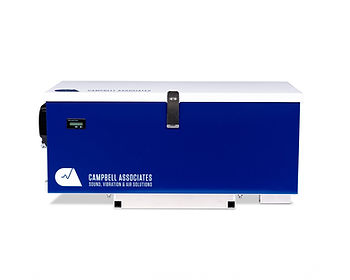
Campbell Associates Solar Power Hub with SiteSens Dust Monitor

Summary:

Solar offers emission free, low-cost power for construction & demolition sites when matched with the intended devices in operation. To power other devices from the Solar Power hub or for systems with hydrogen backup please contact Campbell Associates to discuss your requirements. This system is available for hire with or without the solar panel option.

The importance of baseline monitoring on construction sites: A Guide to Best Practices

Construction Resources

Introduction

Construction projects are essential for urban development, but they also bring challenges, particularly in managing environmental impacts. Baseline monitoring is a critical component of responsible construction practices, ensuring that any environmental changes are documented and managed effectively. This blog explores the importance of baseline monitoring on construction sites and outlines best practices according to various codes of practice.

What is Baseline Monitoring?

Baseline monitoring involves measuring and recording environmental conditions before construction begins. This initial data serves as a benchmark to assess the impacts of construction activities, ensuring that they do not adversely affect the environment and surrounding communities.

Why is Baseline Monitoring Essential?

  1. Environmental Protection: It helps in identifying and mitigating any potential harm to air, water, soil, and biodiversity.
  2. Community Health and Safety: Ensures that the well-being of nearby residents is protected from construction-related pollutants and disturbances.
  3. Regulatory Compliance: Adhering to baseline monitoring standards helps construction companies comply with local, national, and international regulations.
  4. Risk Management: Provides data to identify and manage potential environmental risks proactively.
  5. Informed Decision-Making: Accurate baseline data helps in making informed decisions throughout the construction process.

Key Elements of Baseline Monitoring

1. Air Quality Monitoring

  • Particulate Matter (PM10 and PM2.5): Measure levels of particulate matter to control dust and air pollution.
  • Nitrogen Dioxide (NO2) and Other Pollutants: Monitor gaseous pollutants to ensure clean air.
  • Dust Deposition: Regularly check dust levels to implement effective dust control measures.

2. Noise and Vibration Monitoring

  • Baseline Noise Levels: Record existing noise levels to establish acceptable limits for construction noise.
  • Vibration Levels: Measure baseline vibrations to prevent structural damage and minimize disturbances to surrounding areas.

3. Water Quality Monitoring

  • Surface Water and Groundwater: Assess the quality of nearby water bodies to prevent contamination.
  • Runoff and Sedimentation: Monitor runoff patterns and sedimentation rates to maintain water quality.

Implementation of Baseline Monitoring

1. Pre-Construction Surveys

Conduct comprehensive environmental surveys before construction begins. This involves collecting data on air and water quality, noise levels and vibration levels.

2. Ongoing Monitoring

Continuously monitor environmental conditions throughout the construction process. This helps in detecting any deviations from baseline conditions and implementing corrective actions promptly.

3. Data Reporting

Regularly report monitoring data to relevant authorities and stakeholders. This ensures transparency and accountability, demonstrating compliance with environmental standards.

4. Mitigation Measures

Implement mitigation measures if monitoring data indicates negative impacts. This could include dust control, noise barriers, water treatment systems, and erosion control practices.

Best Practices for Effective Baseline Monitoring

  1. Use Advanced Monitoring Equipment: Employ state-of-the-art equipment for accurate and reliable data collection. Such as Campbell Associates range of Environmental monitors such as our SiteSens Noise & Dust monitor with cloud portal and 8-month battery life vibration monitor.
  2. Community Engagement: Involve the local community in monitoring efforts to build trust and address concerns.
  3. Review and Update Monitoring Plans: Regularly review and update monitoring plans to adapt to changing conditions and regulations.

Conclusion

Baseline monitoring is a vital practice for sustainable construction, helping to protect the environment and community health while ensuring compliance with regulatory standards. By following best practices and adhering to codes of practice, construction companies can achieve a balance between development and environmental stewardship.

We are finding that more and more of our clients are being asked by Local Authorities to provide baseline monitoring before construction.

Are you starting a construction project? Ensure you meet all environmental requirements by implementing comprehensive baseline monitoring. Contact us for expert guidance and monitoring services tailored to your project’s needs. See more of our range here.

Comparison of power supply options for noise and dust monitors

Construction Resources

To power the 4 SiteSens – DM30N Noise and Dust Monitors on-site, we evaluated three power supply options: mains electricity, a diesel generator, and a solar power system with battery backup. Below is a comparison based on cost, noise emissions, and environmental impact.

Power SourceConsumed Power (kWh/year)Running Cost (£/year)Noise Emissions at 7m (dB)CO2 Emissions (kg/year)
Mains Supply877£219.15015
Diesel Generator (2.5kVA)877£2,350.36724,291
Solar PowerHub877£000


1. Power Usage and Costs:

  • Mains Supply:
    • Annual consumption: 877 kWh.
    • Cost: £219.15/year at £0.25 per kWh.
  • Diesel Generator (2.5kVA):
    • Annual consumption: 877 kWh.
    • Cost: £2,350.36/year at £2.68 per kWh.
  • Solar PowerHub (240W Solar Panel, 460Ah Battery):
    • Annual consumption: 877 kWh.
    • Cost: £0/year.

2. Noise Emissions:

  • Mains Supply: No noise emissions at 7 metres.
  • Diesel Generator: 72 dB(A) noise level at 7 metres, potentially disruptive to site operations and nearby communities.
  • Solar PowerHub: No noise emissions, providing a silent energy solution.

3. Environmental Impact (CO2 Emissions):

  • Mains Supply:
    • Carbon emissions: 15 kg CO2/year from the national grid.
    • No site emissions.
  • Diesel Generator:
    • Carbon emissions: 4,291 kg CO2/year.
    • Significant on-site emissions contribute to the carbon footprint.
  • Solar PowerHub:
    • Carbon emissions: 0 kg CO2/year.
    • No site emissions, offering a fully renewable solution.

Conclusion:

  • Cost: Solar power is the most cost-effective solution with no ongoing energy costs, while diesel is by far the most expensive.
  • Noise: Both solar and mains supply provide silent operations, but diesel generators create significant noise pollution.
  • Environmental Impact: Solar power and battery systems offer a zero-emission solution, making them the best choice for sustainability. Mains supply has minimal emissions, whereas diesel generators produce high CO2 emissions.

Based on the analysis, the solar power and battery system emerges as the most cost-effective, environmentally sustainable, and quiet solution for powering the DM30N monitors on-site.

However, opting for a mains power supply could also offer advantages, as it would eliminate the need for hiring and maintaining a power generator on-site.

Monitoring weather including wind & gusts on construction sites

Construction Resources

Wind and Construction Sites

What is the issue?

Higher wind speeds can significantly increase hazards on construction sites. Wind can affect equipment stability, especially for cranes and scaffolding, and can lead to flying debris, making it more dangerous for workers. It’s crucial for construction teams to monitor weather conditions and implement safety protocols, such as securing materials and possibly halting work during high winds to ensure everyone’s safety.

High winds pose several insurance risks for construction sites, including:

Property Damage: Strong winds can damage equipment, materials, and structures, leading to costly claims. This includes damage from flying debris or toppled scaffolding.

Injury Claims: Increased risk of accidents due to falling objects or unstable equipment can result in worker injuries, leading to liability claims and workers’ compensation costs.

Project Delays & Contractual Risks: Wind-related interruptions can extend project timelines, leading to additional costs and potential penalties.  It is recommended to have a record of weather conditions to assist with disputes and any additional liabilities

What are the limits and recommendations

The Health and Safety executive states:Do not consider going on any roof in poor weather conditions such as rain, ice, frost or strong winds (particularly gusting) or if slippery conditions exist on the roof.  Winds in excess of 23mph (Force 5) will affect a persons balance.

The National Federation of roofing contractors has very useful and practical guidance in their Roofing and Cladding in Windy Conditions document.   https://www.nfrc.co.uk/knowledge-hub/NFRC-publications Their recommendations are 23mph as per the HSE guidelines and 17mph where operatives are handling larger materials which will impact the wind load on them.

Crane operations: The safe wind speed for different types of cranes varies. For example, the maximum in-service wind speed for tower cranes is typically 45 mph, while it’s 31 mph for crawler cranes and 22 mph for mobile cranes.

In general, as stated in ISO 4302:2016 Cranes – Wind load assessment, the maximum wind speed for all cranes types installed in the open should be 20 m/s (45 mph), and it’s 31 mph for crawler cranes and 22 mph for mobile cranes. It can be higher or lower, the rule of thumb is to always check the crane manual and follow crane manufacturer’s guidelines accordingly.

Wind load, Average Wind and Gusts

Normally it is average wind speed, which is reported, however it is usually wind gusts (that are often not considered), which is do the most damage and are most hazedous on construction sites.  Here’s a breakdown of the concepts:

Wind load refers to the pressure exerted by wind on structures and objects.

Static Wind Load is calculated based on the average wind speed and it considers factors such as an objects shape and surface area.

Dynamic Wind Load (Gust Load) accounts for sudden increases in wind speed, known as gusts. Gust loads can significantly impact the safety of individuals and stability of structures.

Higher wind speeds increases the wind load with the square of the wind speed (i.e, doubling the wind speed quadruples the wind load).

Gust windspeed can be 1.5 times higher than average windspeed on flat open areas and 2 times higher in urban areas where you have effects of wind funnelling between buildings. 

For the above reasons wind gusts should be measured accurately and recorded.

How to measure to wind gusts

To measure wind, we use an anemometer which come in two types.  We have traditional the mechanical cup design and ultrasonic anemometers.


Sensors:

Cup anemometers work by measuring their rotating speed and using the cup size to calculate the wind velocity.

Ultrasonic wind sensors use transducers to emit and receive ultrasonic sound waves, and then calculate the wind speed from the time it takes for the sound waves to travel between the transducers.

Cup anemometers have the advantage of being lower cost but are prone to wear and damage because of mechanical parts.

Ultrasonic anemometers have no moving parts and require less maintenance.

Quality of data

When averaged over time, ultrasonic and mechanical measurement accuracies are comparable. Mechanical sensors, however, will not always reflect turbulence and gusts due to the physical limitations of its moving parts. If there is a sudden gust of wind it will take several seconds to register and report the change especially where the wind direction is changing.

An ultrasonic sensor, however, will immediately measure a change in wind direction or a high gust. (This is what spurred the National Weather Service to update its 883 Automated Surface Observation Systems from mechanical to ultrasonic sensors).  For these reasons we use ultrasonic sensors.

How we record gusts and average

Wind speed, wind direction and gusts are reported over a 2-minute interval in compliance with World Meteorological Organisation (WMO) recommendations.

Wind speed is averaged over 2 minutes; gusts are the peak value of wind speed over the 2-minute period and reset at the start of the next 2-minute interval. The peak value is calculated from a 3 second moving average in compliance with (WMO) recommendations.

To complement the sensors we have developed a market leading module in the DL40 which is a LPWAN cellular communications device. Specifically, it connects to  LTE-M or NB-IoT networks depending on which is available or which network provides the better connection.  Data is available 24-7 via the supplied Sonitus Cloud Portal.

The system is powered by 230v/ 100v or 12V DC (includes long life 12v battery packs and Solar)

Cloud Data reporting.

The cloud displays wind speed and gusts as standard and with the GMX600 version it will also report temperature, humidity and precipitation. Real time alerts can also be set to advise site management immediately via SMS or email if wind speeds exceed thresholds.